 Stride Rite
Fit & sizing guide
Easy-On Toddler Shoes That Still Stay On
Compare easy-on toddler closures for adult speed, child independence and secure heel hold—without accepting a sloppy fit.
Start here
Easy-on toddler shoes should open wide for dressing, then close securely enough to prevent heel slip. Look for a pull tab, flexible tongue and adjustable hook-and-loop strap, elastic lace or other child-manageable closure.
Easy on and secure are two different scores
An easy-on toddler shoe serves two people. The caregiver wants an opening that is quick to access during departures, while the child may be learning a repeatable dressing sequence. Neither goal eliminates the shoe’s main job after it is on: remaining controlled during ordinary movement. Score the pair twice—once for loading the foot and fastening it, and once for heel hold, toe room and stability after the child stands. A shoe that earns a perfect speed score but slips during every turn has not solved the full problem.
Define “easy” for the actual household. One family may need a fast adult-operated closure for daycare drop-off. Another may prioritize a toddler pulling on shoes with minimal help. A child who removes footwear in the car creates a different challenge from one who struggles to get the heel past the collar. The right design matches the recurring friction point rather than winning an abstract contest for the fewest seconds.
Match the closure to the person doing the job
A single hook-and-loop strap gives many toddlers a visible action: open, place the foot, then press. Two straps can create more adjustment but add another step. Elastic laces with a strap reduce loose ends while retaining a familiar sneaker shape, although the fixed elastic tension must suit the specific foot. A true slip-on removes a fastening task, but its opening and elastic panels must balance entry with retention. Conventional laces provide broad adjustment and usually remain an adult job until the child has the required coordination.
Do not rank these closure families without seeing their implementation. A short strap may have little usable fastening surface. A stiff tongue may not move far enough to expose the opening. A decorative pull loop can be too small for an adult finger. An elastic panel may be easy for one foot shape and restrictive for another. Product details can create a shortlist; the indoor routine reveals which design is genuinely manageable.
Perform the doorway test
Set the unfastened shoe on the floor as it would appear during a normal departure. Can the tongue or upper move out of the way without requiring both adult hands to hold the opening? Can the child’s foot enter while the heel remains aligned over the shoe rather than folding the back down? If a pull tab is provided, can it be grasped without pinching fingers? Count only the motions the family will realistically repeat, not an ideal technique that works once in a quiet store.
Then reset the shoe and let the toddler attempt the age-appropriate part of the routine. Some children can pull a strap but still need an adult to seat the heel; others can step in but cannot align the fastening. Partial independence is still useful. Identify the one step where help remains necessary, because the next purchase should make that bottleneck easier rather than adding unrelated features. Skills vary, so the test is about today’s routine, not meeting a milestone by a fixed birthday.
Confirm that convenience survives movement
After fastening the pair as designed, watch a short sequence of natural indoor actions: walking away, turning back, pausing, squatting and rising. The heel should not repeatedly lift or pull free, and the foot should not slide forward into the toe area. Ask whether the closure stayed engaged without being overtightened. A secure shoe should not depend on bulky socks, an improvised knot or an adult pressing a strap beyond its intended contact area.
While the child is seated, a gentle check at the heel can reveal a shoe that comes off with almost no resistance, but it should not become a tug-of-war or replace observation during movement. Remove the pair and look for rubbing or persistent marks around the collar and closure. If the shoe appears painful, causes skin injury or accompanies limping, stop using it and seek suitable professional guidance rather than prioritizing the easy-on feature.
Stage a real morning before keeping the pair
Use the return-safe indoor period to imitate the setting that made easy-on shoes important. Place the socks, shoes and outerwear where they normally sit. Try the routine once when the adult is leading and once when the child participates. Notice whether the opening stays available, the tongue disappears under the foot, the strap twists, or the left and right shoes are frequently confused. This rehearsal produces more useful information than timing a single carefully prepared attempt.
For daycare, ask what staff need from the footwear. A center may prefer closed toes, prohibit certain loose components or expect shoes a child can manage during repeated transitions. The best choice should cooperate with that policy without sacrificing fit. Add a name label only where it will not create a hard edge against the foot, and confirm the label remains attached before the shoe returns to the classroom.
Build cues that reduce adult intervention
Independence often improves through clearer information rather than a radically different shoe. A contrasting pull tab can show where to hold. A flexible tongue can be left open and visible. Maker-approved left/right cues on the insoles or another non-irritating area can turn matching into a simple picture. Keep the sequence consistent: find the correct side, open fully, place toes, seat the heel, close, then stand. Praise completion of one link in the chain instead of taking the shoe away at the first pause.
Practice at a calm time, not only when everyone is late. Two or three attempts can be enough before frustration rises. If the child repeatedly crushes the heel, separate the skill of holding the opening from the skill of pushing the foot forward. If the strap is the obstacle, let the adult position it and have the toddler perform the final press. The target is a dependable routine, not a performance for an age chart.
Keep easy-on features working
Convenience can decline as the shoe collects grit, lint and wear. Inspect hook-and-loop surfaces for debris and follow the manufacturer’s care directions rather than scraping them with a tool that may damage the material. Check elastic for uneven stretching, pull tabs for loose stitching and decorative pieces for damage. Replace frayed laces with an appropriate length, and do not allow loose ends or failing components to become a trip or choking concern.
Reassess fit when a formerly simple shoe becomes hard to put on or suddenly starts slipping. Growth may have changed the available room, but so can worn elastic, a curled insole, thicker seasonal socks or a closure that no longer holds. Measure again before ordering the next pair. Buying the same model and number automatically can repeat a problem if the child, product version or intended sock setup has changed.
Use a final four-question keeper card
Before removing tags, ask four practical questions. Does the foot enter without force or a collapsed heel? Can the responsible person operate the closure reliably? Does the shoe remain secure through normal movement? Is the whole fit—length, width and vertical room—appropriate in the socks and setting that matter? A “no” on the last two questions outweighs a fast first impression. Easy-on is a valuable feature only when it belongs to a shoe that otherwise fits its wearer.
Record why the winning design worked: perhaps a deep-opening tongue, a long adjustable strap or a child-readable left/right cue. Save the exact model and version rather than the brand alone. That note will make future shopping more efficient while leaving room to re-measure and reconsider. The purpose is not to find one permanent answer; it is to reduce repeated friction without trading away secure, comfortable wear.
Reviewed model starting points
Compare current exact Amazon offers
These model families connect to a verified direct Amazon listing. Check the selected size, width and color because availability and features can vary.
As an Amazon Associate I earn from qualifying purchases.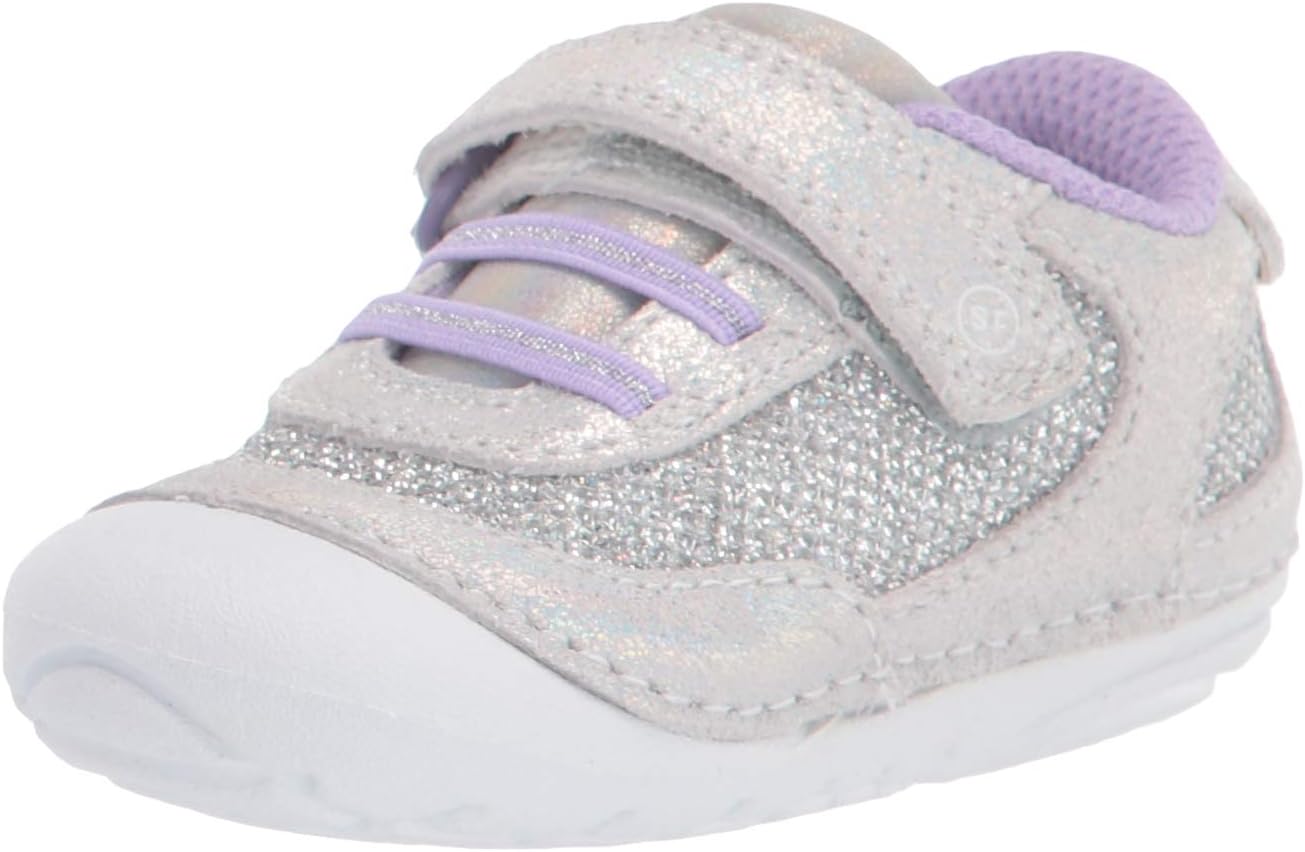

Caregiver questions
Are slip-ons easiest?
They remove a fastening step, but the fixed opening and elastic tension may suit some feet better than others. Test whether the foot enters cleanly and the heel remains controlled before calling a slip-on easier overall.
When can toddlers put on shoes themselves?
There is no useful universal deadline. Let the child practice one manageable step at a time—matching sides, opening the closure, seating the foot or pressing a strap—and provide help for the rest.
Are elastic laces safe?
Use the product only as instructed, inspect the elastic and any small components regularly, and address loose or damaged parts promptly. The system must also hold the foot appropriately rather than serving as a shortcut around poor fit.
Sources and verification
Product details can change. Confirm the current exact model before buying.