 Stride Rite
Sports and Play Surfaces
Toddler Cheer Shoes for a First Class: Rules, Floor and Fit
Confirm the cheer program's shoe rule and floor, decide whether a clean everyday sneaker is enough, and pack a practical first-class kit.
Start here
A first recreational cheer class may accept a clean everyday athletic shoe or specify something else. Ask the instructor before buying; cheer styling and adult competition assumptions do not establish a toddler requirement.
Send the program a seven-line question
Ask for the class name and age group, exact footwear rule, floor or mat type, indoor-only requirement, closure or color requirement, whether children change on site, and whether a cheer-specific model is mandatory. Request the answer for the current session rather than relying on a general website photograph. If there is a uniform packet, compare its wording with the instructor's reply and ask about any conflict.
This message protects against two opposite mistakes: buying specialized shoes a toddler class does not need and arriving in ordinary sneakers when the program has a documented rule. Do not ask the retailer to interpret the gym's policy. The program knows its room and lesson; the manufacturer knows its shoe. The caregiver's job is to match the two descriptions without adding a promise from either side.
Remove competitive assumptions from a recreational class
Toddler cheer may involve songs, simple arm positions, following lines, short movement games, and group transitions. It should not be treated as a scaled-down version of an older competitive team's footwear program unless the instructor explicitly says so. Features discussed for advanced routines, competition surfaces, or adult athletes do not automatically benefit a beginner, and a professional silhouette does not prove that the toddler size shares the same construction.
Ask what the child will actually do while wearing the shoe and for how long. If the instructor accepts a clean, secure everyday sneaker, begin with the pair the child already knows. A separate purchase becomes relevant only if the existing shoe fails a stated rule, no longer fits, cannot be kept clean for class, or is unsuitable for the named floor according to its maker.
Map mat, wood and multipurpose floors separately
A spring floor or practice mat, finished wood court, and multipurpose room present different facility-care questions. Some programs may prohibit outdoor debris; others may specify non-marking outsoles or reserve a pair for indoor use. Confirm the exact policy. Do not assume a deeply patterned sole is better on every surface or that a flat court-style bottom is permitted everywhere. No outsole eliminates the need for a clean floor and age-appropriate supervision.
Inspect the candidate for packed grit, moisture, cracks, separation, and unusual wear. Cleaning follows the shoe maker's instructions, while floor access follows the program. Never pour water, apply a grip coating, sand the outsole, or create a home side-slip challenge. If the venue changes rooms for a showcase or holiday class, recheck the rule because a shoe cleared for one practice floor may not be accepted on another.
Decide whether the everyday sneaker passes
Use a yes-or-question screen. Is the exact shoe type allowed? Is the outsole clean enough for the room? Does the pair currently fit both feet with class socks? Does the closure stay engaged during ordinary starts and turns? Is the toe covering and complete construction compatible with the instructor's wording? Can the helper put it on correctly before the class transition? Any unanswered requirement returns to the program or manufacturer.
A pass means no shopping is needed for the first class. Keep the shoe familiar and preserve a clean indoor state if requested. A fail does not immediately mean cheer-specific footwear; the replacement may simply be another approved athletic shoe. Avoid model recommendations until current product evidence confirms the exact size, construction, and rule match. Generic lists cannot know local inventory or team policy. Record who approved the candidate.
Fit for a short session and its transitions
Measure left and right feet and use the current model chart. Fit with the sock required for class. Check toe room, forefoot placement, instep pressure, heel hold, and usable closure range. During a clean indoor trial, observe normal walking, pausing, turning, crouching, and a small side step only if it is already familiar. A shoe should stay aligned without being overtightened.
Do not oversize for the length of a term or add an unapproved insert to imitate a specialty fit. Extra length can allow sliding, while a larger upper may worsen heel hold. A child removing a new shoe once is not proof of discomfort; repeated selective removal, a consistent complaint, or a movement change deserves inspection. Persistent pain, skin injury, swelling, or limping requires stopping use and seeking qualified advice.
Pack for the first class before purchasing anything
Bring the approved shoes in a separate bag if they must remain clean, the exact class socks, the written rule or uniform note, a labeled water bottle if the program requests one, and familiar travel footwear for arrival. Include a spare sock and a bag for damp items when useful. Do not pack loose accessories, adhesives, polish, or replacement decorations for emergency shoe modification.
Arrive early enough to ask where the footwear change happens and who checks it. Show another caregiver how the closure lies when correct. If staff identify an unexpected requirement, document it and use the program's temporary solution if offered; do not make a hurried marketplace purchase from the lobby. The first session can gather information, and many programs allow families to confirm gear before committing.
Use the class itself as a logistics review
After the session, ask the instructor whether the pair complied and remained appropriate for ordinary class activities. Note whether the outsole collected debris, the closure loosened, the sock bunched, or the child needed repeated footwear help. These are concrete adjustments for the next week. Do not infer technique, talent, foot development, or injury risk from one unfamiliar lesson. If the class used a different room than advertised, add that floor to the record before deciding anything about the shoe.
Inspect the shoes at home and clean them as directed. If they stay at the gym, schedule a condition and fit check rather than forgetting them in a cubby for the whole term. Reconfirm requirements before a uniform order, performance, new level, or venue change. A responsible first-class decision may end with the everyday sneaker still in use. Specialized purchasing should follow a verified need, never precede it. Growth during a term can change toe room or strap overlap even when weekly sessions are short, so keep measurement separate from outsole wear.
Reviewed model starting points
Compare current exact Amazon offers
These model families connect to a verified direct Amazon listing. Check the selected size, width and color because availability and features can vary.
As an Amazon Associate I earn from qualifying purchases.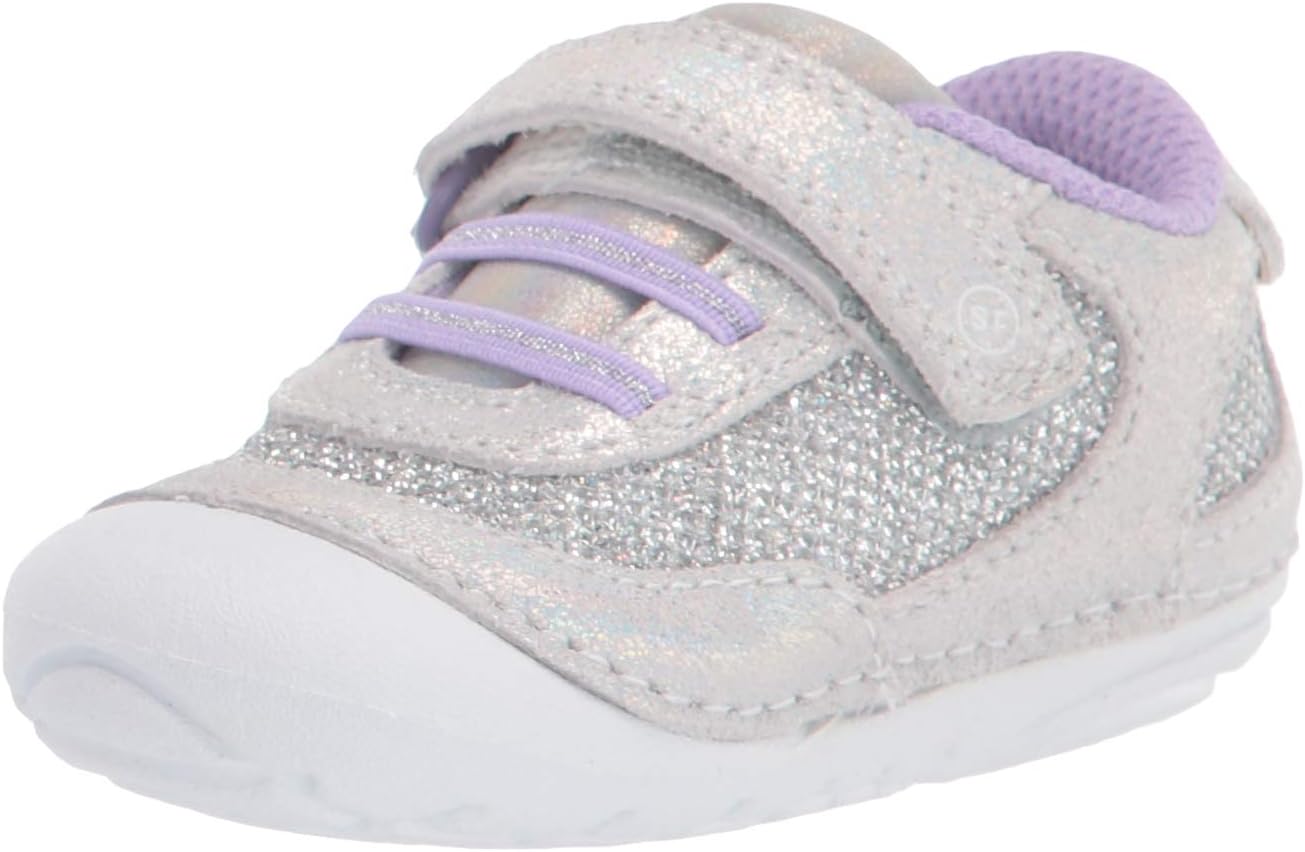

Caregiver questions
Does a toddler need cheer-specific shoes for the first class?
Only the current program can answer. Many introductory classes may accept an approved clean athletic shoe, while others set a specific requirement.
Can playground sneakers be cleaned and used indoors for cheer?
Ask whether the facility permits the same pair. An outsole may retain grit even after visible cleaning, and some programs require indoor-only footwear.
Should first cheer shoes be all white?
Color is a team or program rule, not a universal toddler-cheer standard. Verify the current class instructions before selecting a colorway.
What if the instructor changes the shoe rule after the first class?
Request the updated requirement in writing, clarify the deadline and acceptable options, then verify fit and the exact product. Avoid a rushed substitute based only on appearance.