 Stride Rite
Toddler shoe guide
Toddler Heel Slipping Out of Shoes: Length, Volume or Closure?
Find out whether toddler heel slip comes from excess length, low shoe volume, closure placement or a shape mismatch—and what to check next.
Start here
If a toddler's heel slips out of a shoe, do not immediately tighten the closure or remove all toe room. First seat the heel and observe the shoe during standing, straight walking and turning. Check excess length, spare volume over the instep, closure position and the shape of the heel counter one at a time. Persistent lift, rubbing or instability usually means the pair is not securing the foot appropriately, even if the printed size matches.
Classify the slip before changing anything
Place the shoes on a clean indoor surface and open them completely. Seat each heel at the back, smooth the socks, and fasten the closures to a comfortable position. Watch from behind while the child stands, takes several straight steps, turns and rises onto the toes during natural play. The timing and size of the movement matter more than the mere presence of motion.
A small change at the collar as the foot bends is not the same as the heel repeatedly climbing toward the opening. Note whether the whole shoe drags, only one side lifts, or slipping starts during turns. Compare left and right shoes rather than assuming the same cause affects both.
Branch one: test for excess length
When a shoe is too long for the foot, the foot may slide forward and backward instead of staying aligned with the shoe's intended flex area. Clues include abundant empty space ahead of the toes, the shoe catching the floor, or the child gripping with the toes. Use the brand's measurement method and check the position of the longest toe while the child is standing if able.
Do not diagnose excess length by pressing only on the toe box while the child is seated; toes can retract, and a soft upper can make the space difficult to judge. If the measured foot falls outside the maker's suggested range for that size, compare the appropriate shorter size while still confirming width. A shorter label is not useful if it crowds the forefoot.
Branch two: look for unused vertical volume
A shoe can have reasonable length and still contain more space than the foot uses. Look for a closure that reaches the end of its adjustment, an upper that folds deeply when fastened, or a foot that moves upward under the tongue. These signs suggest a volume mismatch rather than a need to squeeze the strap harder.
Sock thickness can change interior volume slightly, but socks should not be used as padding to rescue a substantially loose pair. Compare a model with a more adjustable upper or a shape designed around a lower-volume foot. If a broader toe area is needed, search for a combination of forefoot room and heel control rather than moving back to a pinching narrow shoe.
Branch three: inspect what the closure can actually control
Hook-and-loop straps, laces, elastic systems and buckles apply tension in different places. A strap located far forward may secure the forefoot but do little for the heel. A closure that is too short to engage fully, twisted, or blocked by a bunched tongue will not provide its intended adjustment. Reset the shoe carefully before judging the design.
Fasten until the shoe is secure, not until the upper visibly compresses the foot. Check that a finger can move around the collar without the foot floating inside. If heel lift continues when the closure is properly positioned and comfortably snug, the design may not match the foot's proportions. Do not add knots, adhesive pads or improvised inserts that create new pressure points.
Branch four: compare heel and collar shape
Some shoes have a straighter back, a deeper heel seat or a differently padded collar. A toddler with a narrower heel may slip in a model that fits across the toes, while another model holds the rear foot without reducing forefoot room. This is a shape comparison, not proof that the child's foot is abnormal.
Inspect the shoe itself for a collapsed back, uneven lining, trapped material or a heel counter that has been folded during entry. Compare the pair side by side. If only one shoe behaves differently despite similar foot measurements, a construction or wear difference may be contributing. Follow the seller's return or defect process rather than continuing outdoor use.
Use a controlled A/B check
Change one variable at a time. First refit the same pair with the heel seated. Next compare normal sock thickness rather than stacking socks. Then, if measurements support it, compare an adjacent size or another model with a different volume profile. Record heel movement, toe space and any pressure location for each trial.
Judge the pair during the movements that trigger the problem, but keep the outsole clean and the trial brief enough to preserve return eligibility. A shoe that seems stable while sitting may lift during turns; one that holds during straight walking may still rub on stairs. Stop any comparison that causes pain, broken skin or repeated stumbling.
Decide whether adjustment or replacement is the safer next step
A simple refastening may solve slipping caused by an unseated heel, twisted tongue or loose closure. Replacement is the clearer path when the measured length is unsuitable, the closure has no usable adjustment left, the upper collapses around the foot, or the heel continues to rise enough to rub or destabilize the shoe. Retaining generous toe width does not require accepting a loose heel; another shape may provide both.
Seek advice from a pediatrician or qualified foot-health professional when heel slipping accompanies ongoing pain, swelling, skin injury, a persistent limp or a walking change that also appears without the shoes. Fit troubleshooting can identify observable shoe behavior, but it cannot determine the cause of a medical or developmental concern.
Reviewed model starting points
Compare current exact Amazon offers
These model families connect to a verified direct Amazon listing. Check the selected size, width and color because availability and features can vary.
As an Amazon Associate I earn from qualifying purchases.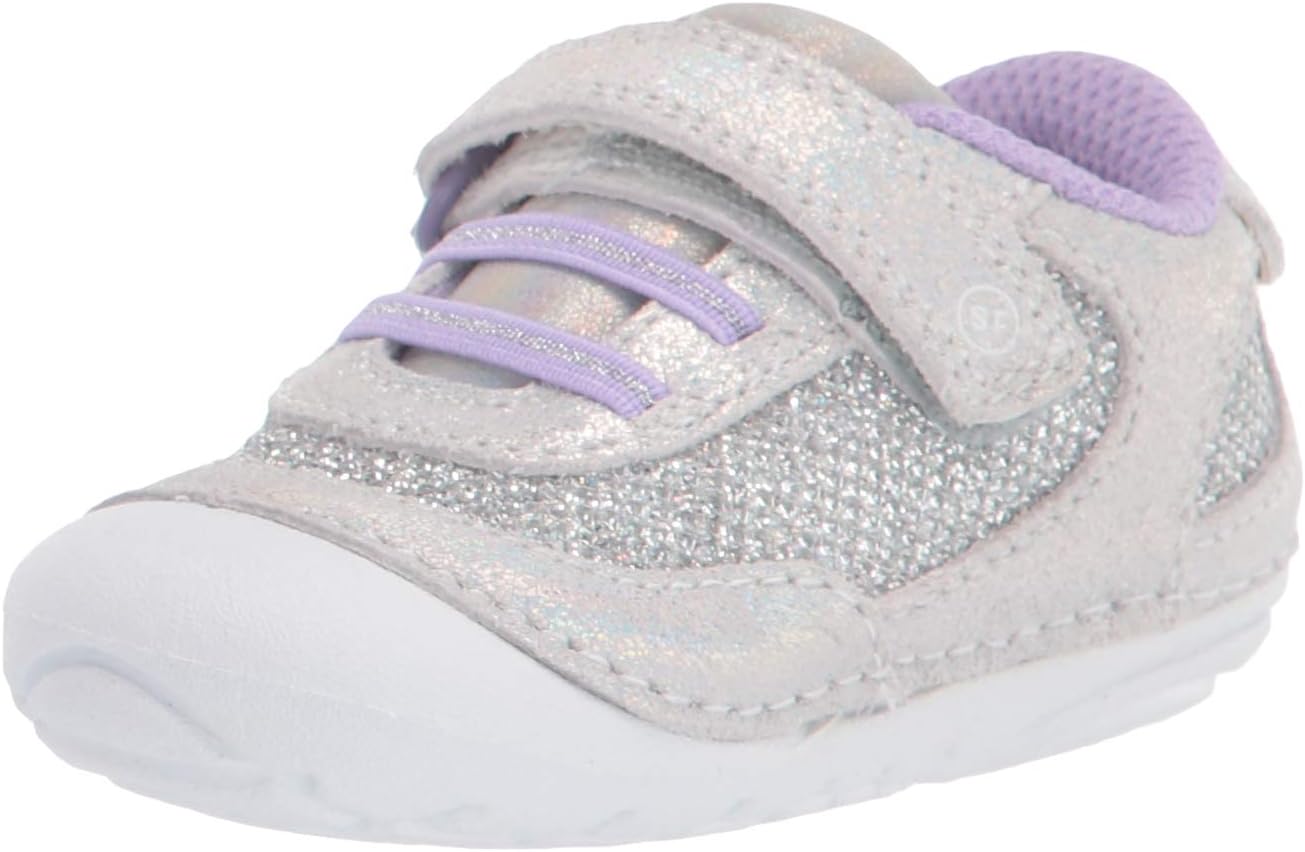

Caregiver questions
Does heel slip always mean toddler shoes are too big?
No. Excess length is one possibility, but spare instep volume, closure placement and a mismatch between the shoe's heel shape and the foot can also allow lift.
Can I tighten the strap until the heel stays down?
Only fasten to a comfortably secure position. If holding the heel requires compressing the upper or pulling the strap to its limit, compare a different size or shape.
Will thicker socks fix shoes that keep falling off?
A normal seasonal sock changes fit slightly, but extra-thick or layered socks should not be used to fill a substantially oversized shoe. Reassess the shoe instead.
Is a little heel movement acceptable in toddler shoes?
The collar moves as the foot bends, but the heel should not repeatedly climb out, rub or make the shoe unstable. Observe the pair during several ordinary movements.