 Stride Rite
Sports and Activities
Toddler Playground Shoes by Surface: Mulch, Rubber and Pavement
Choose toddler playground shoes by comparing mulch, poured rubber and pavement, then inspect debris entry, closure, cleanup and an existing pair's adequacy.
Start here
The playground name tells you almost nothing about the ground. Turn over the existing pair, walk the route, and decide whether its coverage, closure and cleanup fit the actual surface mix.
Bring the current pair to the playground map
Before shopping, take the pair the child already wears and list the surfaces between the car or stroller and the play area. Many outings combine a paved approach, loose mulch under equipment, a poured-rubber zone and wet grass at the edge. The shoe must manage the route, not just the square beneath the slide. Note whether the site has posted footwear rules and verify current requirements with the operator when the setting is staffed.
Turn the shoe over and inspect rather than ranking tread patterns. Look for intact outsole material, embedded debris, worn-through areas or damage that changes how the pair sits. Check the upper for openings that admit fragments, the toe coverage against the planned ground and the closure's condition. No visual feature guarantees grip or prevents a fall. The decision is whether this known-fitting pair remains sound and practical for supervised play on the observed surfaces.
Use a three-surface matrix, not a best-shoe list
For mulch, prioritize debris entry, closed coverage where appropriate and a stop-and-clear routine. For poured rubber, consider heat, stickiness after spills and whether the sole collects small material. For pavement, look at coverage, ordinary wear and the approach distance. Add a fourth column for the transition among them. Then rate the existing pair as ready, needs a condition fix, or wrong for a named part of the route.
The matrix does not prescribe a product category. A secure everyday sneaker may cover all three in dry weather. A sandal may suit one warm controlled area but expose too much on rough mulch or a long pavement approach. A rain boot may handle a wet edge yet be unnecessarily cumbersome for warm active play. Compare exact fit, construction, care and weather rather than treating playground shoe as a specialized label.
Follow mulch from outsole to sock
Loose chips and fragments can lodge in tread, collect at the tongue or enter around a collar. Before play, confirm the shoe is empty and the sock lies smooth. During the outing, pause when the child stops repeatedly, points to a shoe or changes movement. Sit in a safe place, remove the pair and inspect the interior and sock. Clear material using the care method appropriate to the shoe; do not dig into lining or outsole with a sharp tool.
After play, check the welt or sole edge and shake out only as the maker permits. A high collar does not guarantee debris exclusion, and overtightening is not a seal. If the same opening repeatedly fills, compare another tongue, collar or closure layout for mulch days. This is a cleanliness and comfort decision, not evidence that one style is safer. Supervision and playground condition remain separate responsibilities.
Read poured rubber as a temperature and cleanup setting
Poured surfaces can look uniform while current temperature, shade, moisture and contamination vary. Adults should assess the surface and follow posted guidance; footwear does not make an overheated, wet or damaged area appropriate. For the shoe decision, inspect whether the upper and outsole can be cleaned by a method the household can actually use after dust, snacks or sticky spills. Verify washable or wipe-clean language for the exact variant.
A flexible-looking athletic shoe is not automatically breathable, and a dark sole is not automatically non-marking or heat resistant. Those properties require product-specific support, while playground use may not require a non-marking claim at all. Watch the child during ordinary play and schedule water and rest as the setting calls for. If the shoes return damp, give the lining enough permitted drying time before the next wear instead of focusing only on the visible surface.
Treat pavement as both approach and play zone
A neighborhood playground may involve more pavement walking than equipment time. Estimate the door-to-gate distance, whether the child will ride partway and whether scooters or ride-on toys are part of the visit. Choose footwear for the activity under adult direction; do not claim a reinforced toe or particular outsole prevents wear or injury. Inspect the exact pair after ordinary use and replace it when condition or fit no longer supports the routine.
Pavement also magnifies the cost of a loose closure. Before leaving, fasten the shoe and have the child walk, stop and turn on a clean safe area. Check that the heel stays reasonably seated and laces or straps remain contained. Repeat at the playground gate after the stroller or car transfer. A closure that opened during the trip should be corrected before play, not treated as a minor inconvenience because the surface appears smooth.
Issue the existing-pair adequacy card
Give the current pair one of three cards. Green means it fits both feet now, remains intact, stays secured and can be cleaned and dried on the household schedule. Yellow means the shoe may work after a defined step, such as removing embedded debris, replacing only a maker-approved removable component or correcting the sock and closure setup. Red means it is outgrown, damaged, repeatedly loosens, admits intolerable debris or mismatches a required weather or venue condition.
A red card starts a focused search. Write the failure in one line—“mulch enters through the open side,” “heel lifts on the paved walk,” or “pair cannot dry before daycare”—and compare candidates against that problem. Do not upgrade every feature at once or default to an expensive athletic label. The next pair only needs to fit, remain manageable and solve the actual surface or rotation issue while meeting current site rules.
Route the pair through a post-play cleanup station
Create a small landing place near the door. Check soles for embedded material, empty the interior, separate damp socks and identify stains before they set. Follow the exact care label for brushing, wiping, washing, insole removal and drying. A machine cycle, bleach solution, disinfectant or direct heat should never be inferred from the fact that the shoe is used outdoors. Keep cleaning products away from children.
Use cleanup as the final fit observation. Did the closure remain stable? Was one sock twisted? Did debris enter the same location again? Are there persistent marks or complaints? Record only useful facts and avoid turning one playground visit into a durability claim. When the pair passes, return it to the rotation after it is fully dry. When it fails, bring the one-line problem back to the surface matrix before shopping.
Reviewed model starting points
Compare current exact Amazon offers
These model families connect to a verified direct Amazon listing. Check the selected size, width and color because availability and features can vary.
As an Amazon Associate I earn from qualifying purchases.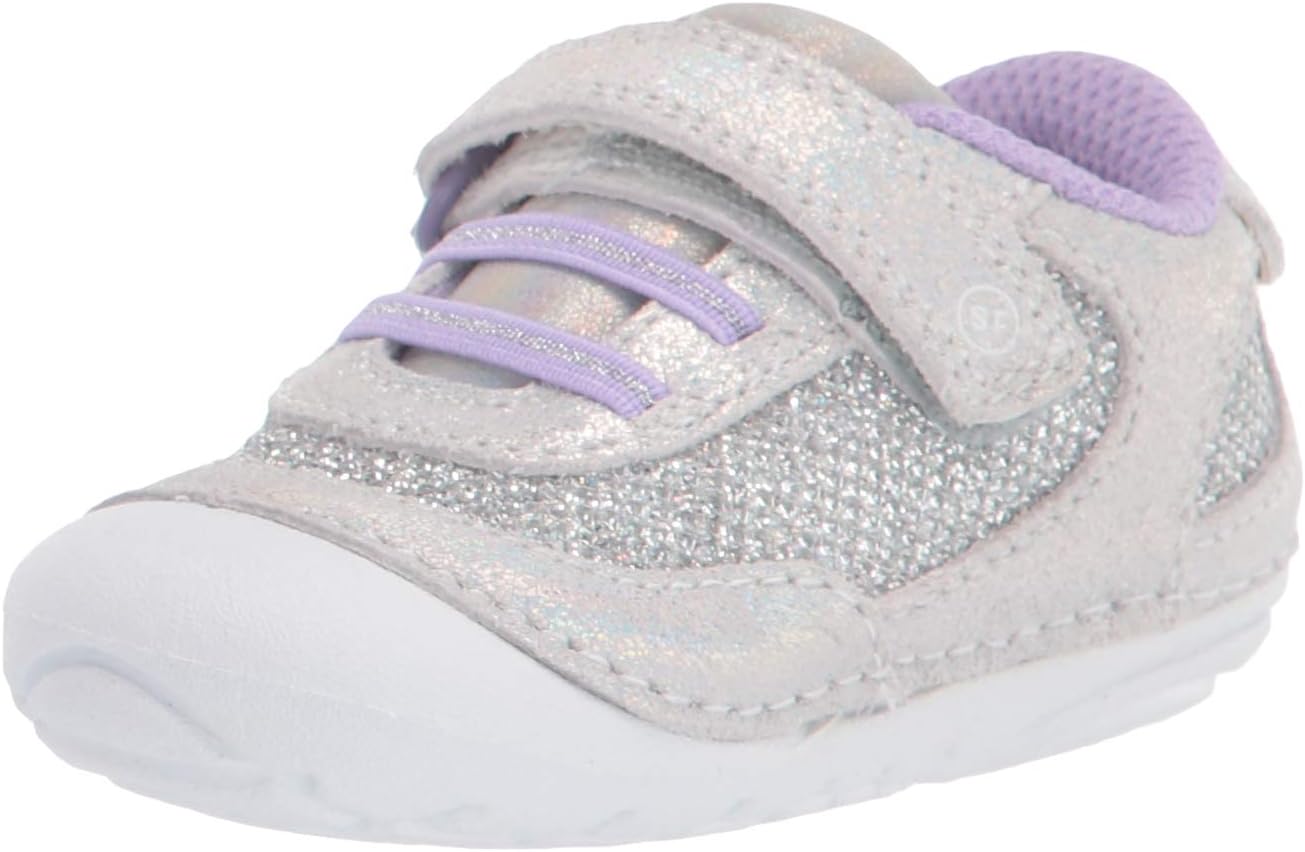

Caregiver questions
What shoes should a toddler wear on a mulch playground?
Choose a well-fitting pair whose coverage and closure suit the route, then plan to inspect for chips around the collar, tongue, sock and outsole. No design excludes all debris, so stop and clear the shoe when the child signals discomfort.
Do toddlers need special athletic shoes for playgrounds?
Usually the decision can start with an intact, secure everyday pair. A specialized label is unnecessary unless the exact route, weather, facility rule or repeated fit and cleanup problem creates a specific unmet need.
Can sandals work on poured-rubber playgrounds?
They may be permitted in some settings, but assess coverage, fit, closure, weather, debris and the paved approach. Check current site rules. The surface name alone does not determine whether an open shoe suits the outing.
How often should playground shoes be cleaned?
Inspect after each outing and clean when the shoe's condition calls for it, using the exact care instructions. Remove trapped debris promptly and allow damp interiors to dry fully; a universal washing calendar may be too much or too little.