 Stride Rite
Toddler Shoe Basics
Toddler Shoes vs. Baby Shoes: What Actually Changes?
Compare baby and toddler shoes by walking stage, surface, sole, closure and coverage so you can choose for the next real outing—not an age label.
Start here
The useful dividing line is not the birthday on the box. It is whether the footwear must stay secure and protect a child who is walking independently on a particular surface.
The short answer: the job changes before the label does
Baby shoes often serve warmth, appearance, or light protection while a child is carried, crawling, cruising, or practicing in a protected space. Toddler shoes are more likely to be chosen for repeated independent walking beyond those protected spaces. Retailers do not draw that boundary consistently, so “baby,” “infant,” “first walker,” and “toddler” are shopping labels rather than a dependable progression.
Start with the job. If the child is not walking outdoors, footwear may only need to cover the foot for a brief occasion. If the child is walking from the house to the sidewalk, across a playground, or through a store, the pair must handle ground contact, remain on during turns, and suit the hazards of that route. Walking stage and surface tell you more than age alone.
Read the four jobs hidden inside the shoe
Outsole, closure, coverage, and interior shape are the four practical differences to inspect. The outsole separates the foot from the surface and should make sense for where the child will walk. A decorative crib shoe and an outdoor shoe can look similar from above while having very different bottoms. Turn the candidate over and ask whether its construction belongs on carpet, smooth indoor flooring, dry pavement, wet grass, or some other planned surface.
The closure must do more than look tidy. It should open enough for the foot to enter without force, then adjust to hold the pair during ordinary motion. Coverage is equally contextual: an open design may suit one warm, controlled setting but leave too much exposed on a rough route. Finally, the shoe must have usable room in length, width, and instep volume. A more substantial-looking shoe is not automatically a better-shaped shoe.
Three routes show why age is the wrong shortcut
Picture three children who are all described as toddlers. The first is carried to a family photograph and stands briefly on clean flooring. A soft, lightweight covering may complete the outfit because the shoe has almost no travel job. The second walks from a front door along dry pavement to a nearby play area. That child needs a secure outdoor candidate whose bottom, coverage, and fastening suit that route. The third moves between a wet yard, a car, and an indoor room. No single age label reveals the need for easier cleanup, weather-appropriate coverage, or a backup pair.
These examples are not product prescriptions. They are a way to translate a vague department name into observable conditions. Write down the longest stretch of walking, the roughest surface, the likely mess, and who will put the shoes on. That brief route note becomes a more useful shopping brief than “shoes for an eighteen-month-old.”
A stage-not-age decision path
First ask whether the child is walking independently for the planned activity. If not, decide whether any footwear is required for warmth, venue rules, or surface protection. Keep the solution proportionate to that limited job. If independent walking is part of the plan, identify the surface. A safe, clean indoor area presents a different problem from a public walkway or debris-prone ground.
Next, check whether the candidate is designed and sized for that use. Open it fully, place both feet in without curling the toes, fasten it normally, and observe a clean indoor trial. Look for secure heel behavior, usable forefoot space, and ordinary starts, stops, turns, and crouches. If the pair must be forced on, only stays put when overtightened, or repeatedly slips during movement, another shape or closure deserves consideration. The department label cannot rescue a poor match.
Do not confuse “first walker” with a deadline
First-walker is a useful shopping category when it leads to shoes intended for early outdoor walking, but it is not a certificate that every model will fit every new walker. Nor does a child need to graduate into a heavier-looking shoe merely because a retailer changes the age heading. Choose a first-walker candidate when independent steps and outdoor protection create a real need, then judge the exact pair on the child.
The reverse mistake is keeping a very soft or loosely held baby shoe in service after its job has changed. A shoe that was adequate for being carried may not remain secure during a full playground visit. Reassess when the route changes, not just when a birthday passes. The best time to move categories is when the existing pair no longer performs the required task or no longer fits—not when a chart says the child has entered a new age band.
What to record before buying online
Create a five-line note: both foot measurements, the socks expected with the pair, the main surface, the closure helper, and the current shoe’s fit issue. Use the exact maker’s chart for the candidate rather than transferring a size from another brand. If the listing does not make the intended use, chart basis, or closure visible enough to evaluate, keep looking instead of filling the gaps with assumptions.
For an early walker, compare the first-walker and soft-sole collections as starting points, not as automatic answers. A category narrows the field; it does not replace measurement or trial. If the day includes several settings, the day-stage-closure pair finder can clarify whether one pair plausibly covers the route or whether the child’s indoor and outdoor needs are genuinely different.
Make the next outing the final test
The practical difference between baby and toddler shoes becomes clear when you can describe what the pair must accomplish. Name the route, choose the least complicated footwear that meets it, verify the current chart, and trial the candidate indoors. Keep the pair only if it fits both feet and behaves predictably during the movements the child already makes.
Recheck after the first useful outing. Did the closure remain secure? Was the coverage appropriate? Did the shoe return dry and clean enough for the next planned use? That evidence is more valuable than the department sign. When the child, surface, or schedule changes, run the decision again rather than assuming the next word on the retail ladder is automatically correct.
Reviewed model starting points
Compare current exact Amazon offers
These model families connect to a verified direct Amazon listing. Check the selected size, width and color because availability and features can vary.
As an Amazon Associate I earn from qualifying purchases.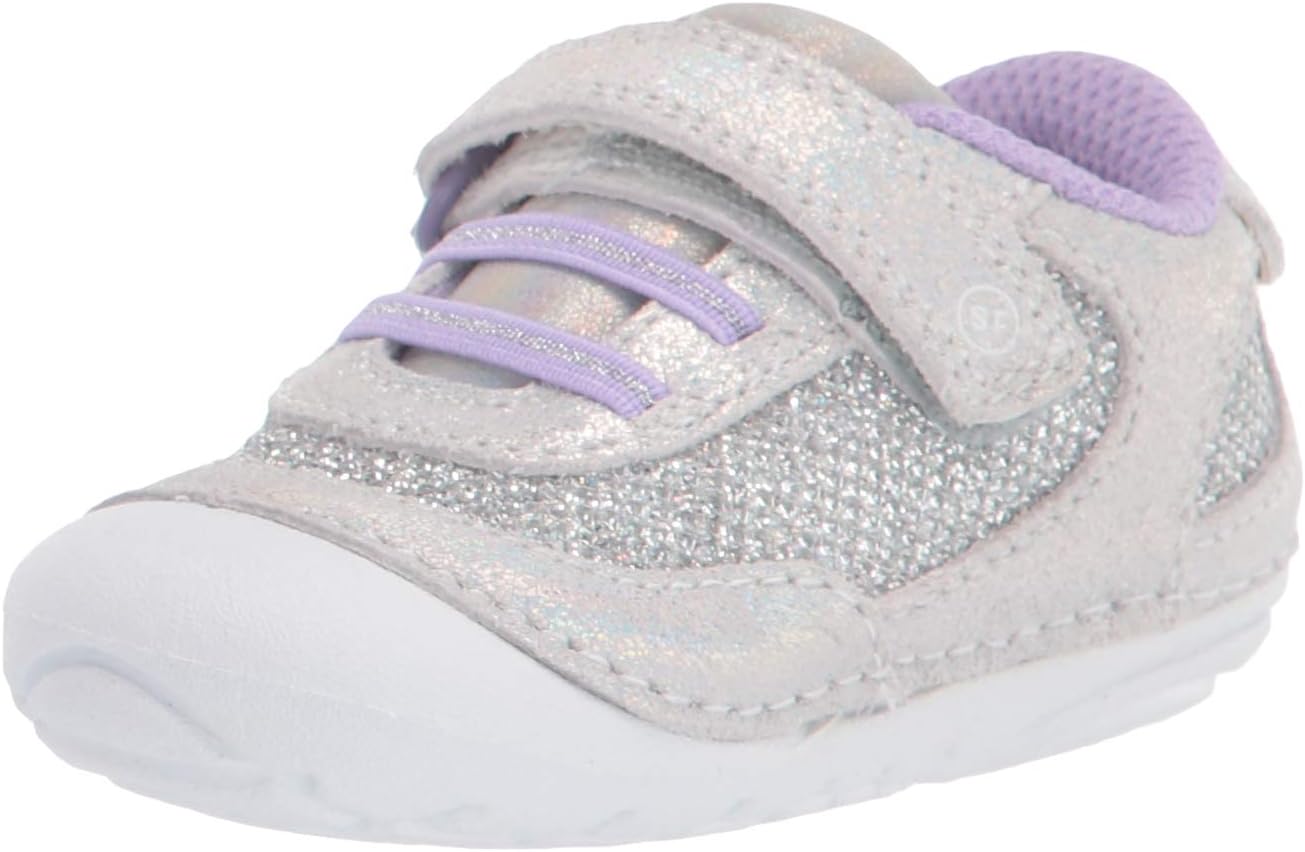

Caregiver questions
Are baby and toddler shoe sizes the same system?
They may overlap, because baby and toddler are often retail departments rather than universal measurement systems. Use the complete size selector and the exact brand or model chart, then confirm the fit on both feet.
Does a child need toddler shoes as soon as they turn one?
A birthday alone does not create the need. Choose footwear for the child’s walking stage, the surface, the setting’s rules, and the protection required for the actual activity.
Can a pre-walking child wear toddler shoes for an event?
A brief event may call for foot covering, but the pair should still fit without being forced or used to make developmental promises. Keep the design proportionate to the limited job and remove it when it is no longer needed.
When should I shop the first-walker collection?
Use it when a child’s independent outdoor steps create a real protection and security job. Treat the collection as a shortlist, then verify measurements, the current chart, the closure, and movement in the exact pair.