 Stride Rite
Fit & Sizing
How to Buy Toddler Shoes Online With a Fit-and-Return Plan
Use current measurements, a chart audit, a two-size decision and a clean indoor trial to buy toddler shoes online without treating the size label as proof.
Start here
For an online toddler-shoe order, measure both feet on the day you shop, identify the chart's measurement basis, order only candidates whose shape and closure suit the child, and preserve the return option until a clean indoor trial is complete. The plan is not to predict fit perfectly; it is to make uncertainty visible and reversible.
Set four stop rules before opening product pages
Decide what would make you leave a listing. Stop if the size chart does not say whether its numbers refer to foot length, inside length or exterior product length. Stop if the seller's return window, condition requirements or return cost are unclear. Stop if the intended socks, closure or use cannot be reconciled with the photos and description. Stop if the only fit evidence is an age recommendation. These rules prevent an appealing color or discount from carrying an under-documented candidate into the cart.
Then write a one-line brief: “closed daycare shoe, worn with light socks, opened by an adult, mostly dry pavement and indoor flooring.” Add the current problem, such as a strap that barely reaches or a heel that lifts. This brief gives every product page the same examination. The objective is not to collect all available specifications; it is to verify the few details that control this purchase. If a detail cannot be found, ask the manufacturer or seller rather than converting an omission into an assumption.
Create a measurement packet, not a remembered size
Measure both feet while the child stands, following a consistent method, and record the date, left length, right length and any reliable width measurement the chosen chart uses. Keep the original unit, preferably millimeters when available, instead of repeatedly converting and rounding. Note the socks planned for the pair and which foot is longer. A previous box size can sit on the packet as a reference, but it should not become the input to a new brand's chart.
Add observations from the current shoe. Where does the widest part of the foot sit? Does the upper bulge? Does the heel lift? Is the closure near one end of its range? A measurement captures length better than volume or heel shape, so these observations help filter construction. Retake a questionable measurement instead of averaging it into confidence. If the toddler will not stand long enough for a useful result, pause and try later; ordering from a rushed trace undermines the rest of the plan.
Audit the chart one column at a time
First identify the region and child-size sequence. Next find the column definition: recommended foot length is not the same as removable-insole length or outsole length. Then read the brand's directions about allowance. If the table already maps foot measurement to a recommended size, do not automatically add a second growth allowance. Finally, confirm that the chart applies to the exact model or determine whether it is only a brand-wide guide. Save a screenshot with the order date because web charts can change.
Treat conversion charts as translation aids, not physical guarantees. A US label mapped to an EU label on one site does not prove another brand uses the same interior. Likewise, reviews saying “runs small” mix different measuring methods, expectations and foot shapes. A repeated model-specific comment about a difficult opening may be a clue, but it should lead back to observable construction and the return plan. The chart produces a candidate size, not a verdict.
Read product images for shape and access
Use top, side, rear and outsole images for different questions. The top view can reveal taper and closure coverage. The side view shows how high the upper crosses the instep and where the sole appears to bend. The rear shows collar shape and pull-on access. The outsole view reveals the footprint and whether decorative bumpers make the shoe look longer than its usable interior. Product images cannot establish fit, but they can disqualify shapes that repeat a known problem.
Study the opening sequence. Does the tongue lift, does the strap truly expand the opening, or is the foot expected to pass through a fixed elastic throat? For a high instep or a caregiver who needs quick access, this may matter more than the advertised easy-on label. Verify materials and care instructions in text rather than inferring them from appearance. A mesh-looking panel does not prove breathability, washability or water suitability. Keep interpretation modest and tied to what can actually be seen.
Decide whether one size or two is rational
Ordering two adjacent sizes can reduce delay when the measurement falls near a chart boundary and returns are genuinely easy. It is less useful when the known problem is width, instep depth or heel shape, because two lengths may reproduce the same mismatch. Before doubling an order, calculate the full return burden: temporary charge, return shipping, deadline, packaging requirements and the risk that a toddler wears one pair outdoors. Do not order a wide spread of sizes merely to create a home fitting room.
If you order one size, document why it was selected. If you order two, predefine the comparison: toe position, forefoot alignment, heel behavior and closure range. The larger pair does not win because it offers more months, and the smaller does not win because it looks neater. Each must independently pass. When the smaller crowds and the larger slips, the model is the failed variable. Return both and change the shape instead of choosing the less obvious failure.
Run the unopened-box and indoor-trial sequence
When the parcel arrives, compare the box label, shoe label, ordered variation and pair before removing tags. Photograph any discrepancy. Read the return conditions again and keep packaging organized. Inspect for mismatched sizes, damaged lining, unevenly seated insoles, broken closures or foreign objects. Only then open the shoe fully and put it on with the planned socks. Forcing the foot through a restricted opening is not part of fitting.
Test both shoes on a clean surface. Have the child stand, walk toward a familiar object, turn, crouch and rise. Observe the longest-toe area, widest forefoot, instep, heel and fastening position. Remove the shoes and look for concentrated rubbing or persistent redness after the brief trial. A toddler's novelty reaction is not enough by itself to label the fit good or bad, so prioritize repeatable physical observations. Stop if there is pain, skin injury or a marked gait change.
Close the loop with a keep-or-return record
Use three possible outcomes. Keep means the pair passes both feet, the closure has usable adjustment and the route and care needs match. Exchange means the model shape appears workable but the chart selection clearly failed in length. Return-and-change-model means the toe shape, width, volume, opening or heel geometry is wrong even when length is plausible. This third outcome prevents endless size changes inside a poor last. Complete the decision early enough to protect the return deadline.
Record the order date, measured lengths, model, chart basis, candidate size and the observed outcome. The note makes the next purchase faster without turning the size into a permanent identity. Re-measure when enough time has passed or the fit changes. Remove returned pairs from the entryway immediately so nobody accidentally uses them outdoors. Online shopping works best when the family is willing to learn from a failed candidate and send it back rather than negotiating with a visible fit problem.
Reviewed model starting points
Compare current exact Amazon offers
These model families connect to a verified direct Amazon listing. Check the selected size, width and color because availability and features can vary.
As an Amazon Associate I earn from qualifying purchases.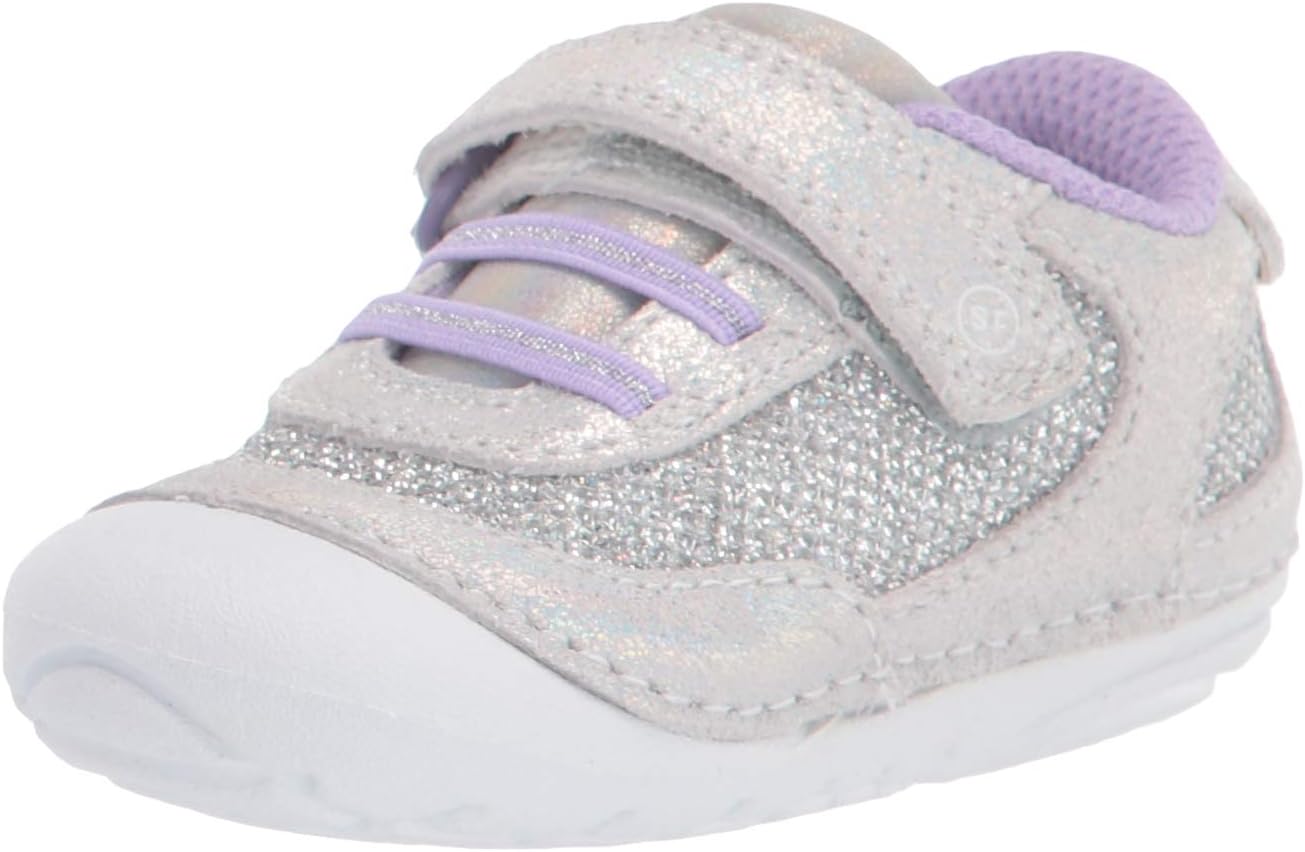

Caregiver questions
Is it safer to order a toddler shoe one size bigger online?
No automatic size increase is safer. Extra length can create sliding, heel lift or a misplaced bend point. Follow the exact chart's instructions, then confirm length, width, volume and heel hold in the actual pair.
Can customer reviews replace a brand size chart?
Reviews can surface questions about a model, but they do not reveal another child's measurements, sock choice or fit expectations. Use them as clues, then rely on current measurements, the chart definition and your own indoor trial.
When does ordering two sizes make sense?
It can be reasonable near a chart boundary when returns are clear and affordable. It is less helpful when the likely issue is width, instep depth or heel shape; in that case, compare models rather than adding lengths.
What should I keep until the fit is confirmed?
Keep the box, inserts, tags, labels, return documents and a screenshot of the chart and order variation. Follow the seller's exact condition rules and limit testing to a clean indoor surface until the keep decision is final.