 Stride Rite
Side-by-side comparison
Laces vs. Hook-and-Loop Shoes for Toddlers
Choose between tunable laces and quick hook-and-loop straps using age, activity and caregiver needs.
Start here
Laces offer adjustment at several points; hook-and-loop straps compress a smaller zone with fewer motions. That mechanical difference matters more than a rule based on age. Most toddlers are not responsible for tying traditional laces, but adults may still choose them when the fit benefits from distributed adjustment. Straps can make repeated changes faster, provided their placement and length match the foot. Frame the choice as tension management: who sets it, how evenly it holds, whether it stays set, and what happens when the child runs, kneels or rides. Then compare exact models rather than assuming every lace or strap system behaves alike.
Draw the tension map
Look at where each closure can change the upper. Traditional laces pass through several eyelets and can be loosened near the toes, instep or ankle. A single strap usually controls one band; paired straps can divide that work. Elastic laces under a strap are a third system and should not be grouped automatically with tied shoes. On a simple outline, mark the areas that tighten and the areas fixed by the shoe's construction. This map helps explain why one closure may accommodate a high instep while another leaves pressure despite extra strap length. Adjustment only helps where the design permits the material to move.
Assign responsibility before choosing
Write down who will fasten the shoes at home, daycare, activities and emergency changes. A lace-up pair assumes someone can create a secure knot and notice loosening. A strap is easier to verify visually, but a toddler may also open it repeatedly. Facility policies may restrict loose laces or require children to manage footwear with minimal help. These practical rules can eliminate a candidate before fit testing. Do not buy tied shoes as a teaching tool unless they also work for the current routine; learning to tie can happen separately from the pair needed for a rushed weekday schedule.
Set laces without creating pressure bands
Loosen the shoe enough that the heel can seat fully instead of forcing the foot through a tight opening. Starting from the lower eyelets, remove slack gradually and keep tension even. The knot should hold without pulling the eyelet rows together excessively. Check for a tongue that wrinkles or shifts sideways, because that can concentrate pressure. Different lacing patterns are sometimes suggested online, but use only approaches compatible with the model and ordinary safety. If basic lacing cannot secure the shoe comfortably, the underlying last or size may be wrong; increasingly elaborate knots should not be used to rescue a mismatch.
Judge strap geometry, not just speed
Open the strap completely and see how far the upper spreads. After the foot is seated, the tab should meet its landing surface with usable overlap. A short tab may barely engage over a high instep, while an overly long one can extend past the shoe or tempt overtightening. Inspect whether the strap pulls straight or twists the tongue. Some designs use decorative elastic laces that do not adjust, so identify the element actually holding the shoe. The fast option is only useful when its geometry produces a repeatable secure setting on both feet.
Observe what happens after kneeling and riding
Toddlers load closures in ways a standing try-on does not show. Kneeling bends the forefoot and may press a knot or strap edge. Ride-on toys can drag toes and shake loose a poorly tied bow. Squatting changes instep volume and can expose a tongue that bunches. During an indoor check, include these ordinary positions if they are part of the child's routine. Stop if the child shows discomfort or the shoe marks the foot. The comparison is not about which closure looks more athletic; it is about which stays secure and unobtrusive through the positions the wearer actually uses.
Prepare for closure wear
Laces fray, stretch and become soiled; eyelets can roughen or loosen. Hook-and-loop fields collect fibers and may lose grip; tab stitching can fail. Inspect the system while cleaning and replace compatible laces when damage appears rather than tying around a weak section. Follow brand guidance for any replacement length or lace type. Do not cut a strap or modify its attachment to improve fit. If the original closure no longer secures the shoe within its normal range, retire the pair from active use. A closure's maintenance burden belongs in the original purchase decision, especially when no backup shoes are available.
Use a consistency scorecard
Across three dressing moments, record time only after recording quality. Did the heel seat? Was tension even? Did the knot stay tied? Did the strap land flat? Could the responsible person reproduce the setting? Then add movement observations and the child's response. A lace-up that takes thirty extra seconds but remains comfortable may beat a fast strap that is set differently each time; in another home, the reliable strap will be the obvious choice. Keep the scorecard specific to the model and size. Closure type predicts a workflow, not the final result.
Reviewed model starting points
Compare current exact Amazon offers
These model families connect to a verified direct Amazon listing. Check the selected size, width and color because availability and features can vary.
As an Amazon Associate I earn from qualifying purchases.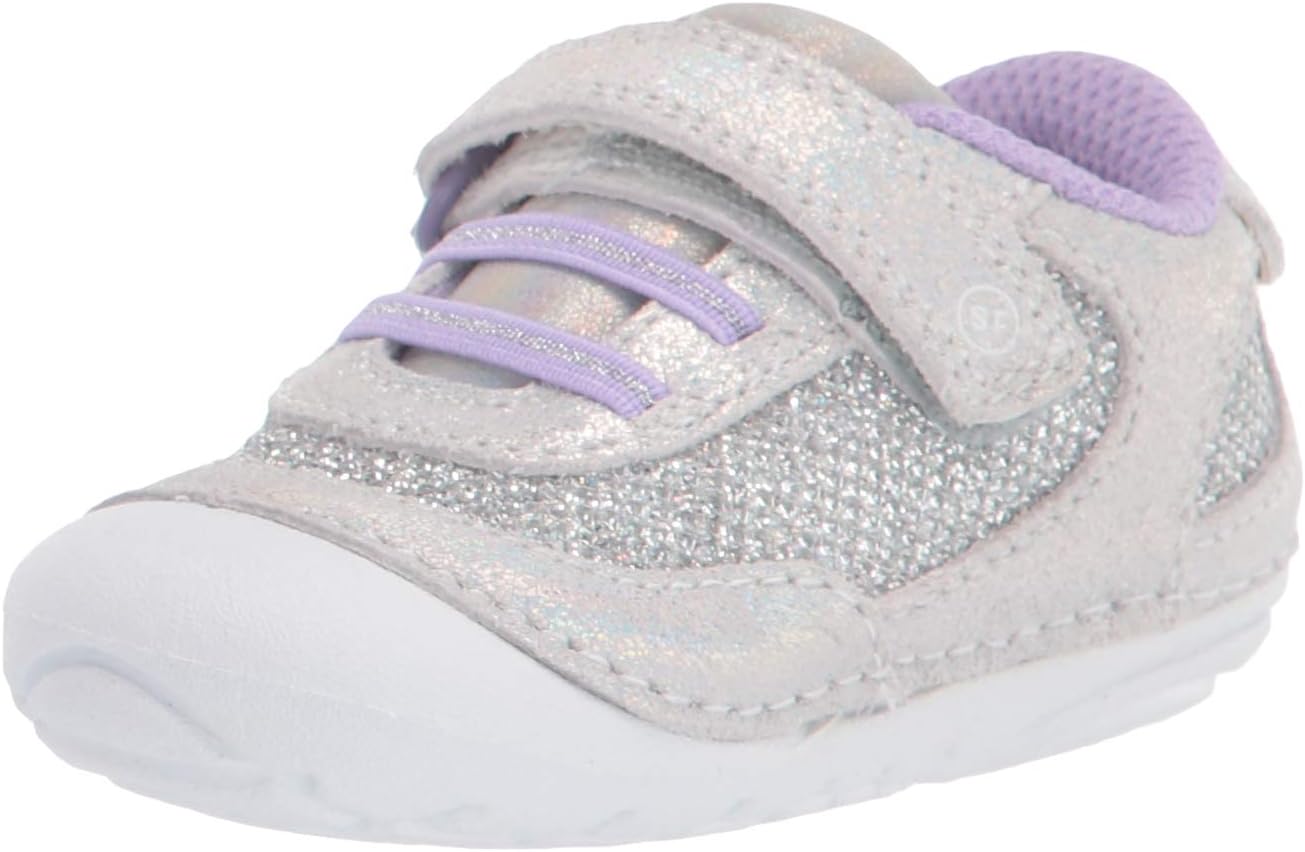

Caregiver questions
At what age should children learn to tie shoes?
Readiness varies, and tying skill is separate from selecting today's footwear. Choose a closure the current caregivers can secure, then teach knots without making the daily pair depend on mastery.
Are elastic laces the same as traditional laces?
No. Some elastic laces stretch without tying and may be paired with a strap. Verify which component adjusts and which component actually retains the foot.
Should lace-up toddler shoes use a double knot?
Follow the manufacturer's guidance and ensure the bow ends cannot trail. A secure knot should not require excessive tension across the foot.
Can worn hook-and-loop material be cleaned back to full grip?
Removing lint may improve contact, but damaged or fatigued material may not recover. Stop using a closure that opens unintentionally and follow the maker's repair or replacement advice.