 Crocs
CrocsSide-by-side comparison
Toddler Snow Boots vs. Rain Boots
Compare insulation, waterproofing, tread and fit volume before using one boot for another season.
Start here
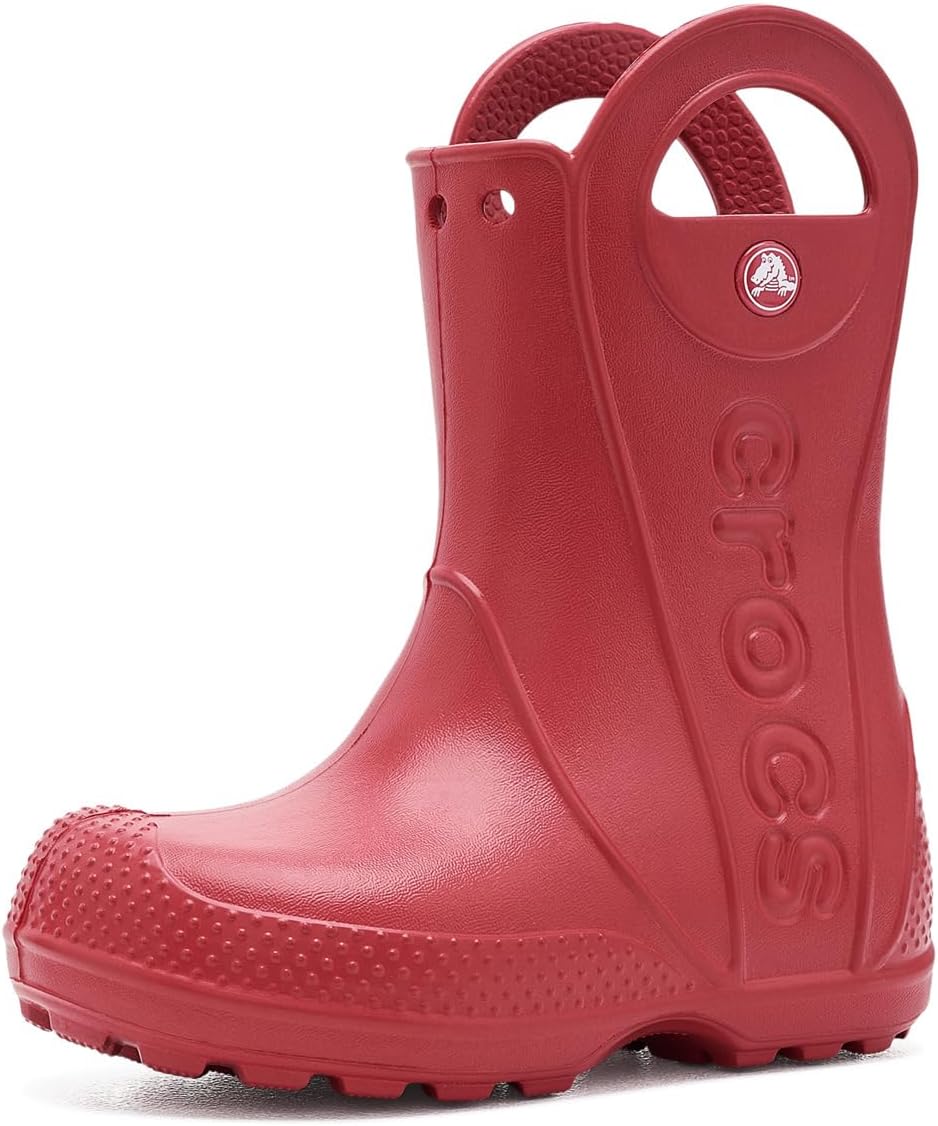
Both boots may look waterproof, but warmth strategy is the dividing question. Snow boots often combine insulation, lining, a weather-resistant shell and tread intended for winter surfaces. Rain boots commonly emphasize a molded barrier and easy cleanup without built-in warmth. Swapping one for the other changes interior volume, drying behavior and temperature management. Build the choice from a weather envelope: temperature, precipitation, time outdoors, activity level and available socks. Then verify the exact boot's stated insulation and waterproof construction. Seasonal names are useful starting points, not permission to ignore fit or conditions.
Draw the weather envelope
Record the coldest likely temperature, the form of moisture, wind exposure and longest continuous outdoor period. Add whether the child will be walking actively, sitting in a stroller or moving between heated buildings. Wet mild weather creates a different demand from dry cold, slush or deep snow. This envelope shows whether insulation is central or whether a simple barrier with appropriate socks may be enough. It also prevents a heavily insulated boot from becoming the default for warm rain, where excess interior warmth and slow drying may be unwanted. Use local conditions, not a generic winter image.
Verify warmth without inventing a rating
Some snow boots publish insulation material or a temperature rating; others use only descriptive language. Keep any rating attached to the exact model and read the conditions or activity assumptions if supplied. Do not create a comfort threshold from lining thickness, customer comments or adult versions. Rain boots may be sold with removable liners, which changes the system and the fit. If warmth information is absent, treat it as unknown. Socks can add insulation but should not be used to turn an unsuitable boot into specialized winter equipment without checking space and manufacturer guidance.
Separate waterproof lower from boot opening
Inspect molded shells, seams, tongue gussets, shaft materials and top closures. A snow boot may have a waterproof lower and a textile shaft with different resistance. A rain boot may be molded high but open widely at the top. Snow, slush and rain can enter around cuffs, especially when trousers channel moisture inside. Verify what the manufacturer claims and where. Gaiters or clothing interfaces should be considered only when appropriate to the activity. No shaft height guarantees dryness during deep immersion, so the route still needs limits and a change plan.
Make room for the intended layer
Use the actual winter sock during fitting, but do not stack layers until the foot is compressed. Thick lining already occupies interior volume, while an unlined rain boot may feel spacious in the same nominal size. Measure both feet and consult the boot's current chart. Check toe position, instep entry and heel movement while standing. A removable liner must sit fully without folds. If the child cannot put the boot on without force or walks stiffly because it is oversized, changing categories or models is better than manipulating sock thickness to compensate.
Read winter tread with humility
Snow boots often display pronounced lugs, whereas rain boots may use shallower channels designed to move water or mud. Tread can assist on some surfaces but cannot make ice risk disappear. Inspect outsole material, coverage and wear, and keep play appropriate to conditions. Avoid claims such as non-slip unless quoted accurately and understood within the maker's context. For routes dominated by cleared pavement, bulk and indoor transition may matter as much as lug depth. On changing surfaces, adult supervision and route choices remain essential regardless of boot style.
Budget drying time for linings
An unlined molded boot can still hold moisture inside, but padded snow boots create more layers for water to move through. Check whether liners or insoles are removable and how the brand directs drying. Never place boots against intense heat by default. Brush away salt or debris using approved methods, because residue can affect materials and hide damage. If a pair must serve consecutive days, a second dry option may be more practical than choosing the warmest construction. A damp insulated boot is not ready merely because its exterior looks dry.
Assign each boot a season card
For the chosen pair, write an allowed-use card: temperature range only when officially supported, moisture type, maximum usual outing, sock, and drying routine. A rain boot may handle cool wet errands with an appropriate layer, while a verified snow boot may be reserved for colder prolonged exposure. Avoid declaring them interchangeable for all seasons. Revisit the card when the liner compresses, tread wears, feet grow or the child spends longer outside. Clear limits make a modest boot safer to use than a feature-rich pair whose actual role is never defined. Add an after-use check for damp socks, cold complaints, pressure marks and unusual walking. Those observations should trigger a fresh fit or condition review rather than an improvised claim about how warm the boot must have been. Keep the card near outerwear so another caregiver can follow the same boundaries without relying on memory or a seasonal product name.
Reviewed model starting points
Compare current exact Amazon offers
These model families connect to a verified direct Amazon listing. Check the selected size, width and color because availability and features can vary.
CrocsCaregiver questions
Can rain boots be used in snow with thick socks?
Sometimes for brief mild conditions, but socks do not create verified insulation or winter tread. Consider temperature, duration, fit volume and the boot maker's intended use.
Are snow boots always waterproof?
No. Some have waterproof sections or membranes, while others emphasize warmth. Read the exact claim and inspect seams, tongue and shaft construction.
How can I tell whether an insulated boot is dry inside?
Feel and inspect the lining and removable components in good light, following care directions. The shell surface alone does not reveal moisture deeper in padding.
Should winter boots be bought a size larger?
Do not add a size automatically. Measure with the intended sock, follow the model chart and evaluate heel hold, toe room and walking on both feet.