 Stride Rite
Daycare, Dressing and Care
When Toddler Hook-and-Loop Straps Stop Sticking
Identify lint, poor overlap, worn fastener material or outgrown fit, then choose conservative cleaning, manufacturer help or retirement.
Start here
A strap that pops open may be dirty, misaligned, worn, damaged at its anchor, or stretched across a foot the shoe no longer fits. Identify the failure before cleaning or replacing anything.
Classify the failure before touching the fastener
Set the clean, dry shoe on a table and open the strap. If the hook or loop area is visibly filled with lint, begin in the debris branch. If the patches look clean but meet only at an edge, use the overlap branch. If they align and press together yet release with ordinary handling, consider material wear. If the strap stays closed in your hand but springs open only on the foot, check fit and tension. A loose anchor, torn stitching, cracked tab, or separating upper is a construction branch.
Photograph the open and closed strap before care. Capture how much of the two surfaces overlap and any damage near the stitching. This is a condition record, not proof of why it failed. Test closure with gentle normal pressure; do not yank repeatedly, scrape the material, or compare its force with another shoe by hanging weights. Conservative troubleshooting aims to preserve evidence and avoid turning a small problem into irreversible damage.
Remove dry debris only by the approved method
Read the shoe maker's care instructions first. If dry debris removal is permitted, work in good light with the strap fully open and the shoe away from the child. Use only the tool and motion the manufacturer supports. Stop if the hooks, loops, stitching, or backing begin lifting. Do not reach for needles, razor blades, flame, solvents, glue, strong tape, or a stiff brush simply because an online tip promises a fast result.
After cleaning, remove every loose fiber and inspect the work area. Close the strap at its normal alignment, press across the complete contact patch, and open it once using the tab. If performance has not improved, repeated aggressive cleaning is unlikely to restore worn material. Store any care tool immediately. Small removed pieces and sharp implements should never remain beside a toddler's dressing area.
Measure overlap instead of tightening harder
Put the shoe on with the usual sock, seat the heel naturally, and route the strap without pulling the upper out of shape. Look at the meeting area. Full-looking contact on an empty shoe can shrink when a high instep or thicker sock fills the upper. A strap attaching only at the patch edge has little usable adjustment, even if pressing harder keeps it closed briefly. Compare with photos from when the pair was new if available.
Check whether the strap is twisted, threaded through a guide incorrectly, or landing above or below its intended patch. Flatten the tongue and confirm it has not bunched under the closure. Do not extend reach with an unapproved patch or clamp the foot by overtightening. Alignment problems may be correctable through normal dressing; insufficient length, poor volume match, or a stretched component calls for a fit decision or manufacturer guidance.
Separate growth from fastener wear
Measure both feet again and use the exact model's chart. Then inspect toe clearance, forefoot width, instep space, heel position, and where the widest part of the foot sits. A strap pulled farther every week may reflect growth or a thicker seasonal sock, not suddenly weak hook material. Conversely, ample space at the toes does not prove the shoe fits if the upper is strained over the instep.
Try the closure on the empty shoe and on the foot. If clean patches engage normally off-foot but release when the shoe is worn, tension or alignment deserves priority. If engagement is poor in both states and the surfaces look flattened or sparse, wear is more plausible. This comparison does not measure laboratory holding strength; it simply keeps an outgrown-fit problem from being mislabeled as dirt.
Inspect the attachment points and surrounding shoe
Follow the strap from tab to anchor. Look for loose threads, elongated stitch holes, a separating laminated layer, cracked synthetic material, a bent guide, or a loop that has pulled away from the upper. Examine the mating patch and the edge that the child grabs. Also check the tongue and lining, because bunching can redirect the strap while a damaged interior can make the complete shoe unsuitable even when the fastener still joins.
Do not sew through, glue, melt, staple, or replace hardware unless the manufacturer or a qualified repair service supports that work for the exact construction. A home repair can create hard edges, loose pieces, or an altered load at the anchor. Stop using the pair when the closure cannot remain secure during ordinary movement, a component is detaching, or the repair status is uncertain.
Choose among contact, repair guidance and retirement
Contact the maker when the care label is unclear, the fastener fails unusually early, a component may be covered by a product policy, or you need to know whether repair is supported. Send the style identifier, purchase date if known, condition photographs, care already attempted, and a factual description of when the strap releases. Do not state that every pair has a defect based on one shoe.
Professional repair is an option only if a suitable service accepts the child shoe and can explain how the fastener and attachment will be restored. Retirement is the appropriate path when the shoe no longer fits, the closure opens during normal use, the anchor or upper is compromised, or an authorized repair is unavailable. Replacing the pair comes after those branches, not before; a clean, aligned strap that still works does not need to be discarded because its surface looks fuzzy.
Reduce repeat failures in the dressing routine
Teach helpers to open the strap using its tab instead of pulling the mating patch sideways. Before closing, smooth the tongue, seat the heel, align the full contact areas, and press across them. Keep the fastening surfaces free from open baskets of fuzzy blankets, loose craft fibers, and pet bedding where practical. After wet or muddy wear, follow the full shoe's care and drying directions rather than closing damp patches together.
Add a weekly glance at overlap and attachment to the normal fit check. Note whether the strap lands in a new place or needs more tension. That observation can reveal growth before a morning closure failure. Hook-and-loop systems are consumable parts, not permanent promises; careful use can preserve them, but visible wear or inadequate fit still sets a limit. The goal is a closure that operates predictably without improvised chemicals, hardware, or excessive pressure.
Reviewed model starting points
Compare current exact Amazon offers
These model families connect to a verified direct Amazon listing. Check the selected size, width and color because availability and features can vary.
As an Amazon Associate I earn from qualifying purchases.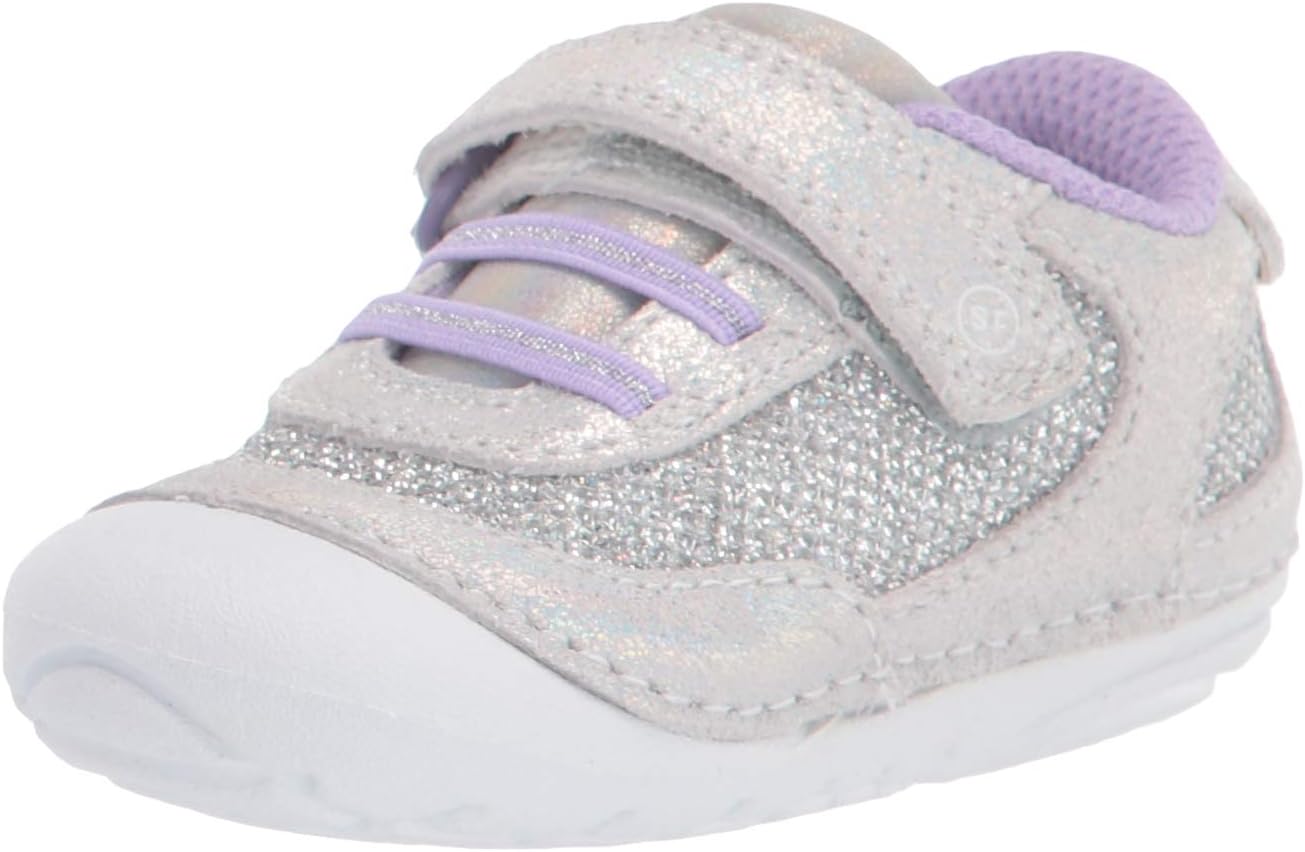

Caregiver questions
Why does a toddler shoe strap stick when empty but open on the foot?
The worn shoe may create tension, poor patch overlap, a bunched tongue, or a fit mismatch. Check current measurements and alignment before assuming the material is dirty.
Can I use a pin to pick lint from hook-and-loop?
Use only the shoe maker's approved care method. Sharp tools can damage the fastener and create a handling hazard, so do not improvise.
Should I glue a replacement patch onto the strap?
Not without explicit manufacturer or qualified repair guidance for that construction. Added adhesive or patches can alter closure behavior and introduce loose or hard components.
When is a non-sticking strap a reason to retire the shoes?
Retire or stop use when the pair no longer fits, opens during ordinary movement, has a damaged anchor or upper, or cannot receive an authorized reliable repair.