 Stride Rite
Closures and Fit
Toddler Shoelace Locks: When They Help and What to Check
Decide whether shoelace locks suit a toddler's shoes, then check cord routing, lock placement, fit, supervision and daily maintenance.
Start here
A lace lock can make a compatible shoe quicker to adjust, but it is not a universal cure for untied laces or a substitute for a secure, well-fitting closure.
Choose the closure problem before choosing the gadget
Start with a blunt question: what is going wrong now? If ordinary laces repeatedly come undone because the knot is loose, improving the knot or changing the lace may solve the problem with fewer parts. If a caregiver needs to open and close the same shoe several times a day, a lock designed for that lace system may save time. If the shoe already slips at the heel or pinches across the instep, adding a lock is unlikely to correct a mismatch in length, width, volume, or shape.
A shoelace lock is a small mechanism that holds one or more cords at an adjusted position. Some systems replace the original laces; others slide onto compatible round or flat laces. The useful comparison is not lock versus no lock in the abstract. Compare the exact lock, lace, eyelet path, and shoe as one closure assembly. A component that works neatly on an adult trail shoe can be oversized, awkwardly placed, or poorly matched to a small toddler upper.
Screen the loose parts before you test the fit
Treat every detachable lock, end cap, cord stop, toggle, and cut lace end as a part that must remain attached and out of the child's mouth. Review the component maker's age guidance and installation instructions; if the product is not intended for young children or its labeling is unclear, do not improvise. Tug each assembled part in the directions ordinary dressing and play could pull it. A lock that separates, cracks, opens unexpectedly, or leaves a removable cap is not a candidate for toddler use.
Placement matters too. The lock should not dangle where it can catch on playground equipment, furniture, bike parts, or the opposite shoe. Long cord loops create a different snagging problem even when the mechanism itself stays closed. Route and finish the cords exactly as directed, keep the remaining loop compact, and reject any setup that requires tying a long tail around the shoe. Supervision and routine inspection still matter; installation does not turn a small accessory into a permanent, maintenance-free part.
Check whether the shoe can accept a lock cleanly
Inspect the original lacing path. Count the eyelets, note whether the lace is flat or round, and see where the tongue and opening need to spread for the foot to enter. A replacement elastic cord may behave differently from the original lace, especially through small fabric loops or tight eyelets. Friction at those points can make tension uneven: the top may feel tight while the forefoot remains loose. Do not enlarge eyelets, cut structural loops, or force a thick cord through hardware that was not built for it.
Before modifying a favorite pair, test compatibility only as the lock maker permits. The shoe should still open widely enough for the foot to enter without curling toes or dragging the heel. Once closed, the tongue should lie reasonably flat rather than bunching under a concentrated pressure point. If the conversion permanently damages the original laces or prevents a return, use a lower-stakes pair only after confirming that the shoe and accessory instructions allow the change.
Set tension by zones, not by one hard pull
A lock makes it easy to pull until the shoe feels immovable, which is not the goal. Begin with the foot fully seated and the heel back naturally. Distribute slack from the forefoot toward the top rather than yanking only at the lock. The closure should hold the shoe during starts, turns, and crouches without visibly compressing the upper or leaving the lock pressed against the ankle. If the child cannot tolerate ordinary tension unless the cords are extremely loose, reconsider the shoe shape.
Use the intended socks and trial both shoes on a clean indoor surface. Watch whether the heel repeatedly lifts, whether the foot slides forward, and whether the child changes gait only after the lock is tightened. Then remove the shoes and look for concentrated rub or pressure areas. These observations do not diagnose a foot problem; they tell you whether the assembly is doing its simple job. Persistent pain, skin injury, swelling, or limping warrants stopping use and seeking appropriate clinical advice.
Assign the lock to the right helper
A squeeze-to-release lock may be easy for an adult and frustrating for a toddler. Decide who must operate it at daycare, during toileting routines, and at pickup. A closure that only one caregiver understands can create a handoff problem. Demonstrate where to press, how far to loosen the cord, and how to stow the finished loop. If staff policies require a familiar closure or prohibit loose accessories, that practical rule settles the decision before fit does.
Independent dressing is a separate goal. Some toddlers may eventually manage a large, simple mechanism, but the ability to pull a cord does not guarantee they can judge safe tension or recognize a loose component. Keep adult checking in the routine. If self-dressing is the priority, compare the complete lace-lock setup with a shoe designed from the start around a broad hook-and-loop strap or another child-manageable closure. The simplest reliable option often wins.
Build a ten-second inspection into dressing
Before each wear, confirm that the lock body is intact, the cord is not frayed, both ends remain secured as designed, and the loop is short and stowed. Slide the mechanism once to make sure it grips and releases normally. After wet or dirty use, follow both the shoe and accessory care instructions; grit inside a mechanism can change how it moves, while heat used for fast drying can damage some cords or plastics. Replace a questionable component rather than trying to glue or tape it.
Reassess as the child's foot and routine change. Marking the cord at a normal setting can reveal that the closure is being tightened farther over time, but the mark is only a prompt to recheck fit. It is not proof that the shoe still has room. Measure both feet periodically and compare the entire shoe, not just the closure. A lace lock earns its place when it stays intact, sits out of the way, distributes tension comfortably, and makes the actual dressing routine easier.
Reviewed model starting points
Compare current exact Amazon offers
These model families connect to a verified direct Amazon listing. Check the selected size, width and color because availability and features can vary.
As an Amazon Associate I earn from qualifying purchases.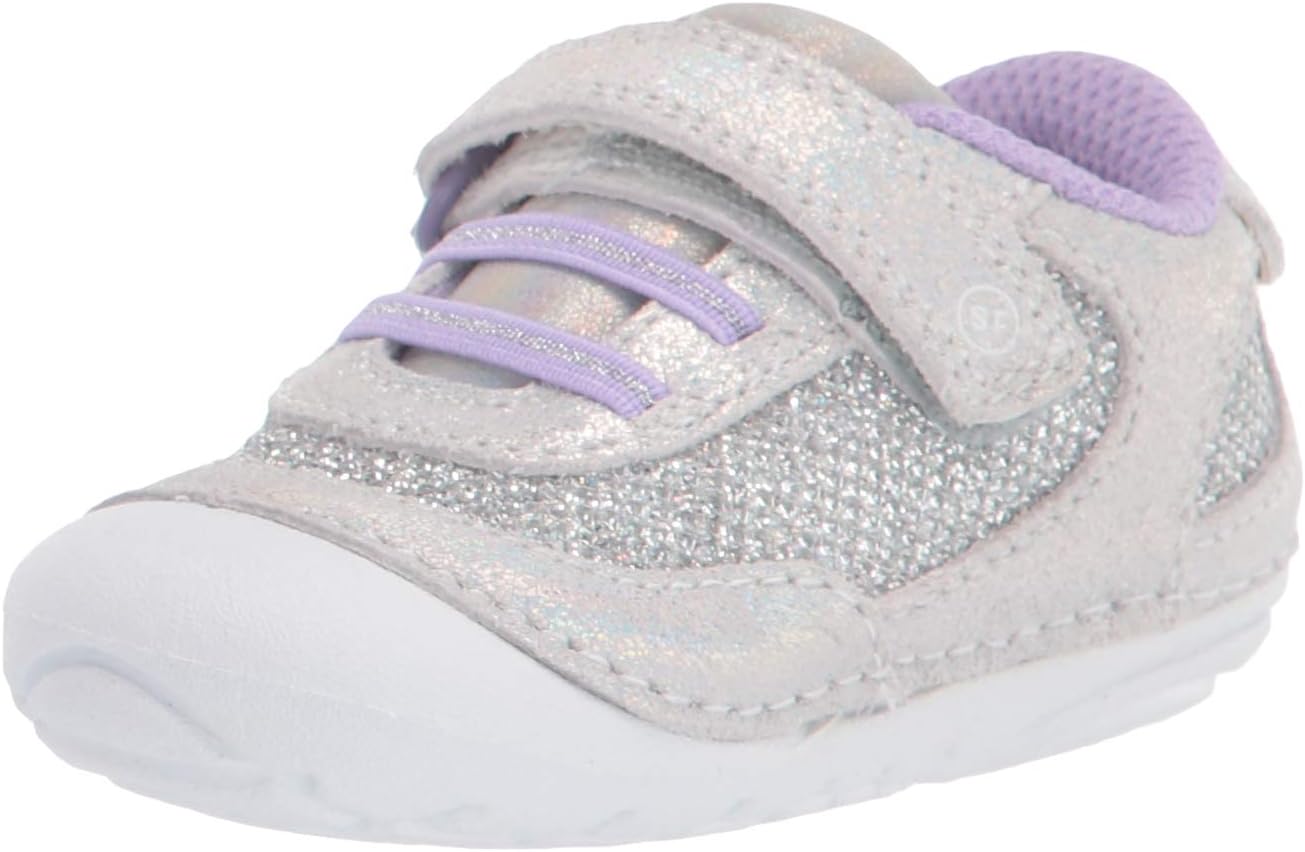

Caregiver questions
Can I put a lace lock on any toddler sneaker?
No. Compatibility depends on the shoe's eyelets, original lace, opening, and the accessory maker's instructions and age guidance. Do not force a cord through small loops or alter the shoe to make a lock fit.
Are elastic no-tie laces the same as lace locks?
Not exactly. Elastic cord is the lacing material; a lock is the mechanism that holds its position. They may be sold together, but the cord, lock, ends, and shoe still need to be evaluated as one system.
How tight should a toddler lace lock be?
Only tight enough to hold the shoe securely during normal movement. Tension should be distributed across the lacing area, not concentrated at the top, and should not visibly distort the upper or create pressure.
What should I do if an end cap comes off?
Stop using the setup and keep the loose part away from the child. Follow the manufacturer's replacement guidance; do not rely on improvised glue, knots, or tape to restore a small detachable component.