 Stride Rite
Buying guide
9 Fit and Use Checks for Toddler Soft-Sole Shoes
Set clear indoor and outdoor boundaries for toddler soft-sole shoes with nine checks for surface, coverage, fit, retention, flex, materials, care, wear, and transition.
Start here
Soft-sole toddler shoes make the most sense when the surface boundary is clear. A pair used on clean indoor floors faces a different job from footwear expected to cross wet pavement, sharp gravel, or a busy playground. Begin by drawing that boundary, then decide what protection and retention the exact model supplies. The phrase soft sole is descriptive, not a guarantee of developmental benefit, fit, or outdoor durability. The nine checks below move from environment to construction and finally to replacement. They are designed to prevent a comfortable indoor pair from drifting into conditions it was never documented to handle. If the child's routine crosses several surfaces, a planned change may be more appropriate than searching for one shoe that remains extremely soft while acting like an outdoor sneaker. Include every caregiver in the map. A grandparent, childcare worker, or babysitter may cross a doorway the primary shopper considers obvious. Clear storage and a simple label can preserve the boundary better than relying on memory.
Checks 1–2: approved surface and enough coverage
Check 1 is the intended surface. Read whether the model is described for crib use, indoor first steps, protected outdoor walking, or broader use. Retail departments may place all of these together, so the product description matters. Check 2 is coverage. Examine the toe, sides, heel, and sole for the ordinary hazards in the planned zone. Clean wood floors and a smooth patio are not equivalent. A thin sole should not be assumed to resist punctures, heat, or wet abrasion. If the route includes unsafe or undocumented surfaces, change shoes at the boundary. This decision protects the model's role without making claims about what softness does for the foot.
Checks 3–4: measured room and dependable retention
Check 3 is fit from current measurements. Use the maker's chart and test both feet with the intended sock or bare-foot setup specified for the product. Look for toe room without excessive length and a smooth upper that does not press across the instep. Check 4 is retention. Elastic collars, ankle straps, hook-and-loop tabs, and slip-on openings should keep the heel settled during standing, crawling transitions, and ordinary steps. Softness cannot rescue a pair that twists or falls off. Inspect for gathered material or seams that leave marks. Because small sizes may use age ranges, verify how those ranges relate to actual foot measurement before ordering.
Checks 5–6: flex behavior and interior materials
Check 5 is how the sole and upper move with the child, not how tightly an adult can roll the empty shoe. Watch steps, squats, and transitions from the floor. The shoe should not bunch under the toes or slide sideways. Check 6 is the interior. Verify lining and footbed materials, then feel for prominent seams, labels, loose threads, or folded insoles. Breathable, leather, textile, and synthetic are broad terms whose practical effect depends on the full construction and environment. Avoid promising barefoot equivalence or therapeutic results. The goal is a cleanly fitted barrier suitable for the stated use, with no interior feature creating obvious irritation.
Check 7: a closure the routine can reproduce
Open the shoe completely and practice entry at the time of day it will usually be worn. A soft upper may collapse, requiring a caregiver to hold the heel and tongue while placing the foot. Elastic can simplify the sequence but may offer little adjustment; a strap can add control if it reaches and lies flat. Check that the closure remains attached during crawling, standing, and short walks. For childcare, ask whether the staff accepts the style and can refasten it. A soft-sole pair used only at home can have a different independence brief from one sent to a group program. Reproducibility matters more than the closure's marketing name.
Checks 8–9: care limits and visible retirement signs
Check 8 is care. Follow directions for wiping, hand washing, machine washing, leather treatment, and drying. A flexible material can still shrink, stiffen, delaminate, or lose shape when cleaned incorrectly, so do not invent shortcuts. Check 9 is condition. Examine the sole for worn-through areas, embedded grit, separating layers, and smooth patches; check the upper and closure for tears or loss of hold. Replace a pair that no longer provides its intended barrier or secure fit. Growth may end its service before wear does. A soft sole remaining bendable is not sufficient evidence that there is still room inside or that the outdoor boundary can expand.
Plan the transition to more exposed surfaces
Revisit the environment map when the child begins walking farther, attends a different program, or spends more time outdoors. The next step is not automatically a rigid shoe; it is a model documented for the new surface that fits and stays on. Compare coverage, outsole, closure, and care while preserving the current measurement process. The soft pair may continue indoors as long as it fits, creating a two-zone system rather than an abrupt replacement. Label each role so caregivers do not carry the indoor shoe into wet or rough conditions. A clear transition plan respects both the usefulness and the limits of soft-sole footwear.
Reviewed model starting points
Compare current exact Amazon offers
These model families connect to a verified direct Amazon listing. Check the selected size, width and color because availability and features can vary.
As an Amazon Associate I earn from qualifying purchases.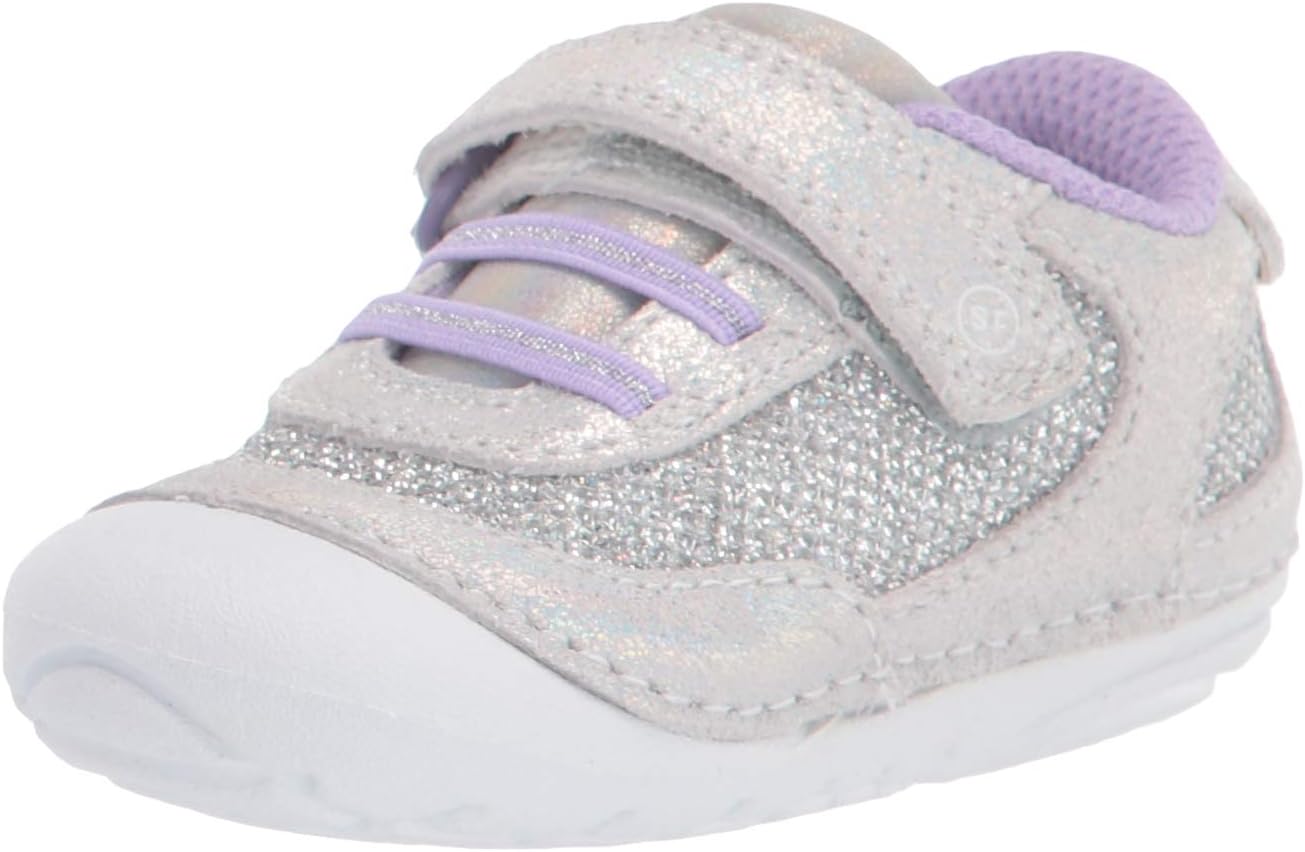

Caregiver questions
Can toddler soft-sole shoes be worn outside?
Only when the manufacturer identifies the exact model for the planned outdoor surface and conditions. Many soft pairs are intended for protected indoor use, so verify rather than generalize.
Are soft soles better for first walkers?
Softness alone does not determine suitability. Consider the child's current environment, secure fit, coverage, materials, closure, and the product's stated stage without making medical claims.
Should soft-sole shoes be worn with socks?
Follow the product guidance and test the planned combination. Socks alter volume, moisture, and retention, so check for bunching, heel movement, and pressure on both feet.
How do I know when soft-sole shoes are worn out?
Inspect for holes, embedded debris, separation, closure failure, interior damage, and loss of fit. Replace the pair when it no longer performs its documented barrier and retention role.