 Stride Rite
Fit & sizing guide
First Walker Shoes: A Calm Checklist for New Outdoor Steps
Choose first-walker shoes using five observable features, a short indoor trial and realistic expectations about what footwear can do.
Start here
A useful first-walker shoe protects outdoor feet while remaining light, securely fastened, appropriately flexible at the forefoot and correctly shaped for the child. Measure both feet, use the longer measurement and the exact brand chart. No shoe can promise to teach or accelerate walking.
Begin with the route, not the shoe wall
List where the child will actually walk during the next few weeks. A dry daycare room, rough playground, wet splash area and cold sidewalk require different traction, toe coverage and materials. First-walker is a marketing category, not one technical specification. The best candidate addresses the main surface without piling on unnecessary weight or structure.
Check any daycare rule for closed toes, heel coverage, labeling or closures. If the shoe will be worn mostly for the walk from car to classroom, easy fastening and dependable everyday grip may matter more than rugged hiking features. A shoe designed around the real route is easier to evaluate than one expected to handle every climate and activity.
Perform a five-point shelf inspection
First, feel the weight in the relevant size; a thick-looking sole can be surprisingly light, while decoration can add bulk. Second, flex the forefoot where toes bend without folding the shoe in the middle like a roll. Third, inspect whether the toe box resembles the child’s forefoot shape. Fourth, check the outsole pattern for the intended surface. Fifth, open the closure fully and see whether the foot can enter without force.
This inspection removes obvious mismatches but cannot establish fit. Avoid treating the tallest collar, softest sole or most flexible shoe as automatically superior. The shoe still needs enough structure to stay attached and enough outsole for the environment. Read factual material and closure descriptions rather than relying on vague claims such as supportive, natural or developmental.
Translate both feet through the model chart
Measure each foot heel to longest toe on a hard floor while the child stands safely in normal socks. Repeat an uncertain result and use the longer measurement. Note width or instep clues, because a length-only chart cannot tell whether a strap will reach or a tapered upper will compress the toes. Age is useful only for locating a likely department.
Use the exact manufacturer chart for the chosen model and confirm that it describes foot length. Follow its stated growth allowance rather than adding a generic amount automatically. If the result falls between sizes, consider closure adjustability and the brand’s instructions. A larger candidate that repeatedly slips is not a good investment in future growth.
Run the first-walk test without over-coaching
Open both shoes, seat the heels and fasten them evenly. On a clean indoor surface, invite the child toward a caregiver or familiar toy. Observe a few normal steps, a turn and a crouch. New shoes may briefly slow a child who is concentrating, so avoid interpreting one hesitant step as a product failure or asking for so many laps that fatigue changes the result.
Look for toes striking the front, side bulging, repeated heel popping, the shoe rotating around the foot or a closure that loosens. Check both feet because the shorter one may slip while the longer one fits. Remove the pair and inspect for rubbing or pressure. Keep the return path open until this test is complete.
Introduce outdoor wear in short, useful sessions
Begin on the surface the shoe was chosen to handle and keep the first outing manageable. Check that the outsole grips normally and debris does not collect inside. Afterward, examine the heel, little-toe area, instep and toe tips. Dry or clean the pair according to manufacturer instructions rather than applying heat that may distort materials.
Continue safe barefoot indoor time where appropriate; shoes do not need to fill every waking hour. Socks should fit smoothly and match the temperature. If daycare requires shoes all day, a breathable upper and easy staff-friendly closure may improve practicality, but those features still come after a verified fit.
Know what first-walker shoes cannot do
Footwear can protect against heat, cold, rough ground and debris. It cannot guarantee balance, correct a walking pattern or speed a developmental milestone. Average children generally do not need unprescribed corrective features. If a clinician has recommended orthoses or particular construction, use that individualized plan instead of a general first-walker checklist.
Stop using shoes that cause injury. Persistent pain, limping, swelling or concerns that continue without the pair deserve pediatric assessment. Recheck fit about monthly, re-measure both feet before replacement and use the next model’s exact chart. A successful first-walker pair is a useful data point, not a lifelong prescription for one brand or style.
Score candidates with a first-walker field card
Give each candidate a simple pass, revise or reject for entry, toe shape, fastening, forefoot bend, weight and outsole. “Revise” means retest another size only when the chart supports it; it does not mean forcing the current pair. A shoe that rejects on toe shape should lead to a different model, while one that rejects solely on excessive length may justify testing the adjacent chart-recommended option.
Add one line for the route. A daycare shoe might pass because it opens wide, stays secure and grips dry indoor flooring. The same pair can remain untested for wet playground equipment. A water shoe may drain well but reject as an all-day classroom choice if seams rub in normal socks. The field card prevents a strong feature from being generalized beyond its setting.
After purchase, date the card and add a brief observation after the first three uses. Check whether the closure stays adjusted, the upper dries as expected and any pressure location appears. Then revisit monthly. A record of how the model behaved is more helpful for the next purchase than declaring that the brand as a whole is good or bad.
Troubleshoot the first week
If the child frequently stops to pull at one shoe, check for a twisted sock, folded tongue, debris or uneven fastening before blaming unfamiliarity. If the heel pops, reseat it and adjust once; repeated lift calls for another fit. If toes meet the front or skin rubs, stop the pair rather than extending wear in hopes of breaking it in.
Keep the shoe’s intended boundary clear. An everyday first-walker sneaker may handle daycare and dry pavement but not standing water or winter cold. Using it outside its role can produce a performance complaint unrelated to fit. A short written note about the role helps other caregivers choose the correct pair.
Observe fastening as well as movement. Hook-and-loop material can pick up lint, laces can loosen, and elastic can fold under the foot. Check the closure before each outing during the first week, then settle into a regular inspection. A shoe that will not stay secured should be repaired according to the maker or replaced; it should not be tightened painfully to compensate.
Reviewed model starting points
Compare current exact Amazon offers
These model families connect to a verified direct Amazon listing. Check the selected size, width and color because availability and features can vary.
As an Amazon Associate I earn from qualifying purchases.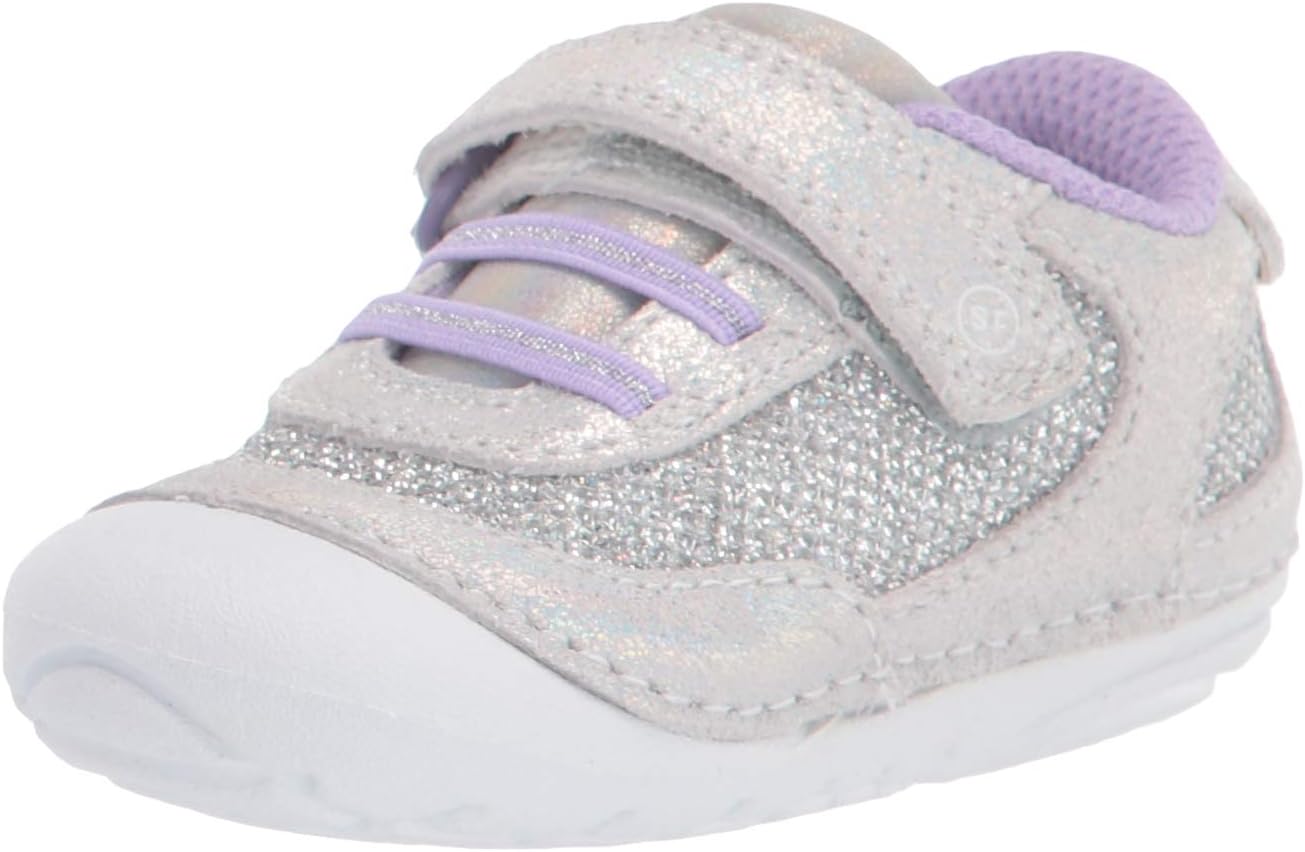

Caregiver questions
Should first walkers wear shoes indoors?
Shoes are mainly needed for protection where the environment or facility requires them. Safe barefoot time is generally reasonable indoors unless an individual care plan says otherwise.
Do first-walker shoes teach a toddler to walk?
No. They protect feet on appropriate surfaces but cannot promise developmental progress, balance or a corrected walking pattern.
How flexible should a first-walker sole be?
The forefoot should bend where the toes bend while the shoe still provides the protection and grip needed for its surface. Extreme softness is not the only goal.
Are soft-soled shoes enough outdoors?
It depends on the surface, temperature and hazards. Choose enough outsole and toe protection for the actual route, then verify traction and fit.
How do I size first-walker shoes?
Measure both standing feet in normal socks, use the longer measurement and follow the exact brand/model chart. Complete a clean indoor movement test before outdoor wear.
Sources and verification
Product details can change. Confirm the current exact model before buying.