 Crocs
CrocsSeasonal & Weather Shoes
Rubber, EVA, Clogs and Water Shoes for Toddlers: Decode the Labels
Separate material words from shoe-shape and use labels when comparing toddler rubber shoes, EVA clogs and water shoes for wet or messy routes.
Start here
Rubber and EVA name material families; clog names a shoe shape; water shoe describes an intended-use category. Those labels can overlap in one product, but none alone tells you how securely it fits, whether it is designed for prolonged water exposure, how it drains or which surfaces it suits. Verify construction and stated use on the exact model.
Put every label into one of three boxes
The first box is material. Rubber and EVA are broad material descriptions, and a single shoe may use either in only some components. The second box is form: clog usually indicates an easy-entry shell with an open or partly open heel, sometimes paired with a movable strap. The third box is claimed job: water shoe usually signals footwear marketed for wet settings. A molded EVA clog can therefore be sold as a water-friendly shoe, while a textile water shoe may contain neither an all-rubber upper nor a clog shape.
This sorting stops one word from answering questions it cannot answer. “EVA” does not confirm a secure heel. “Rubber” does not establish full waterproofing. “Clog” does not prove drainage. “Water shoe” does not promise traction on every wet surface. On a product page, rewrite the offer in plain language: molded shell, open heel, pivoting strap, perforated upper, stated for specified wet use. The rewritten description exposes missing details and makes unlike products easier to compare.
Ask where each material actually appears
A listing may feature rubber in the outsole while the upper and lining use other materials. Another may describe a one-piece EVA construction. Read the component breakdown instead of turning a headline material into the whole shoe. If the page does not identify upper, lining, footbed and sole separately, do not infer their care needs or water behavior from a single icon. Colors and textures in photographs can resemble one another without being the same construction.
Material family also does not settle softness, weight, odor, durability or temperature response for every formulation. Those properties depend on the specific design and manufacturing choices. Avoid blanket rules such as “EVA is always lighter” or “rubber always grips better” unless the manufacturer provides model-level evidence relevant to the comparison. For a parent, the useful questions are concrete: can this exact pair be rinsed, may it be submerged, how should it dry, and does the foot-contact surface remain appropriate after the planned outing?
Examine a clog as a heel-and-opening system
The advantage of a clog shape is often access. A broad opening can simplify quick transitions, rinsing and independent dressing. That same openness can reduce the amount of upper holding the foot. If a rear strap is present, inspect where it lands and whether the maker intends it for walking use. The strap should not be treated as a handle or pulled into a position the design does not support. During an indoor trial, watch whether the heel stays over the footbed or repeatedly escapes sideways or upward.
Next inspect shell shape. Toes need usable room without the entire foot traveling forward. Ventilation holes can release some water yet also admit sand, mulch or small stones. A thick-looking bumper provides visible coverage but does not reveal the interior toe boundary. Clogs may be convenient for a backyard rinse station or short change of shoes; that does not automatically make every model a strong choice for a long walking route. Fit and route still control the decision.
Follow water through a water shoe
For any shoe sold for water, trace the likely path in and out. Open panels, mesh, upper perforations, footbed holes and sole channels perform different roles. A hole visible on the outside may not connect through an insole. A fast-draining upper can still hold water beneath a removable layer. Ask whether the pair is meant to be worn in water, merely tolerate splashes or only clean easily after use. Product care directions and the maker's intended-use statement are more useful than a watery product name.
Balance drainage with exclusion. Large openings may release water and admit coarse sand or playground debris. A close textile upper may block more particles yet hold fine sand against the skin. There is no universal winner because a smooth splash pad, pebbled beach and muddy garden present different problems. Plan a check-and-rinse point during the outing. Water footwear should be removed promptly when debris, rubbing or discomfort appears rather than expected to remain trouble-free for an entire day.
Use the garden-hose comparison
Imagine two errands around a garden hose. In the first, the toddler steps onto a clean patio, helps fill a watering can and changes back into dry shoes after ten minutes. A washable molded clog that fits securely may suit the fast on-off and rinse job. In the second, the child walks several blocks to a splash area, plays where water and grit mix, then walks home. The route may favor a water shoe with more continuous heel and upper security, provided its sole and stated use fit those surfaces.
This example is not a product verdict. It shows how the approach, play area and return trip can outweigh the moment of water contact. Repeat it for a beach: parking lot, hot boardwalk, loose sand, shells, shallow water and cleanup are separate segments. One pair may handle them all, or the family may carry a dry travel pair. Choose deliberately rather than assuming the wettest five minutes defines the whole outing.
Run a four-zone fit check
Check toes, forefoot, heel and closure. The toes should not be compressed by a molded taper or hidden bumper. The broad forefoot should align with the roomy portion of the shell or upper. The heel should remain centered during ordinary steps and turns. Any strap, toggle or elastic should secure the shoe within its useful range, without deep pressure or an upper pulled out of shape. Test both feet with the exact bare-foot or sock setup permitted and planned.
Molded footwear can make length hard to judge from the outside, while stretchy water-shoe uppers can disguise a short footbed. Use the model chart as the starting point and movement as confirmation. Repeat the check after a controlled damp session only when care guidance permits. A wet foot may slide differently, and water may change how the upper behaves. After removal, inspect for rubbing and clear trapped particles before another trial.
Choose from evidence, then manage recovery
Before buying, confirm component materials, intended exposure, closure, care method, drying instructions and return terms. Keep a candidate only if its shape fits and its stated job covers the full route. Reject confident but unsupported shorthand: molded does not mean indestructible, washable does not mean machine washable, and water-friendly does not define submersion, temperature or surface limits. When claims are vague, choose a better-documented listing.
After use, empty debris, rinse or clean as directed, open removable parts when allowed and dry away from unapproved heat. Feel beneath the footbed and into the toe rather than judging by the exterior. Before the next outing, confirm that liners sit flat, the heel strap or closure still works and the sole is free of residue. A pair that dries slowly may require a second dry option even if it performed well. Recovery time is part of the purchase, not an afterthought.
Reviewed model starting points
Compare current exact Amazon offers
These model families connect to a verified direct Amazon listing. Check the selected size, width and color because availability and features can vary.
As an Amazon Associate I earn from qualifying purchases.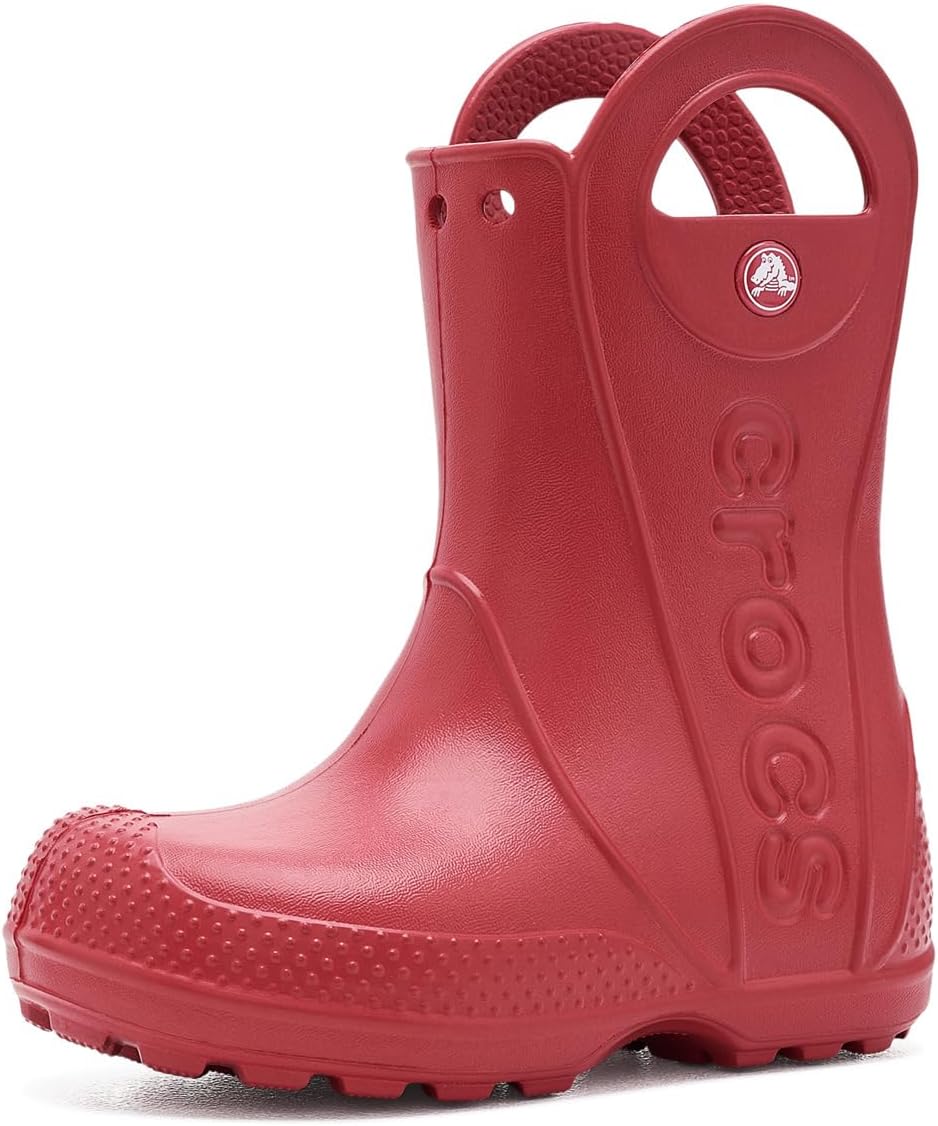
Caregiver questions
Are EVA shoes the same thing as rubber shoes?
No. EVA and rubber are different material families, and product language may simplify or combine component descriptions. Check which material the listing assigns to the upper, footbed and outsole of the exact pair.
Does a toddler clog count as a water shoe?
It can be marketed for wet use, but clog describes a shape rather than a complete performance claim. Verify intended exposure, heel security, drainage, debris entry, sole suitability and care before assigning it the water-shoe job.
Do ventilation holes make a shoe drain well?
Not necessarily. Trace whether openings connect through the footbed and sole, and remember that larger openings can also admit debris. Drainage must be evaluated as a route, not counted as visible holes.
Can molded clogs be used for long walks?
The category alone cannot answer. Consider the exact fit, heel and closure behavior, walking distance, surface and maker's intended use. A pair that works for a short rinse-and-change stop may not be the best match for a longer mixed route.