 Crocs
CrocsToddler shoe guide
Closed-Toe vs Open-Toe Water Shoes for Toddlers
Compare closed-toe and open-toe toddler water shoes by outing, debris, drainage, closure access and fit—without confusing either with ordinary sandals.
Start here
Choose between closed-toe and open-toe water shoes by identifying what is most likely to enter or strike the shoe, how often the pair will move between water and dry ground, and who must fasten it. Closed fronts provide more coverage around the toes; open fronts expose more of the foot and may release loose material more readily. Neither construction automatically fits better, drains faster or grips a wet surface. Inspect the actual pair, fit it to both feet and follow the rules of the pool, beach, camp or childcare setting.
Make the coverage call in 30 seconds
Picture the outing as a short route rather than one destination. A child may cross a paved parking area, walk over loose sand, wade at the edge, then return to a dry boardwalk. Circle the part of that route where exposed toes, trapped grit or a loose shoe would create the most trouble. That highest-friction moment should lead the choice between closed-toe and open-toe water shoes; the category name alone cannot do it.
Use three prompts. First, is the ground mostly clear or scattered with shells, pebbles, roots or play equipment? Second, will the shoe stay on through repeated wet-to-dry transitions or come off near the water? Third, can the toddler and caregiver operate the opening reliably when the foot and shoe are damp? A closed front usually deserves the first look when toe coverage is the priority. An open front may deserve it when easy access and releasing loose sand matter more. The answer can change from one trip to another.
What a closed front changes
A closed-toe water shoe places material between the toes and whatever is directly ahead. That can be useful on routes where a toddler may shuffle through coarse ground or bump against low objects. Coverage is not the same as a rigid protective shell, however, and an enclosed front does not make an unsuitable route safe. Look at how the front is shaped, where the upper joins the sole and whether the child can move without the toes pressing into the end.
More enclosure also creates places where sand or small debris can remain until the shoe is removed or rinsed. The practical question is not whether a closed shoe keeps every particle out. It is whether its opening, seams and drainage path make it manageable for the planned outing. If the front coverage wins the route-card exercise, confirm that the pair can be opened enough to place the foot without curling the toes or forcing the heel.
What an open front changes
An open-toe water shoe leaves part of the forefoot uncovered while still using a water-oriented upper, sole and fastening arrangement. The exposed area makes it easier to see toe position during a fitting and may give loose sand a more direct way out. It also leaves the toes available to contact the environment. That tradeoff matters most on the actual route, not in an abstract argument about which design is cooler or more summery.
Check where the forward edge sits when the child stands. Toes should not hang over the platform or sit so far back that excess length changes walking. Then look at the sides: an open front is not useful if the remaining straps press into the foot or allow it to slide toward the edge. Facility rules may require covered toes regardless of a family's preference, so confirm them before treating an open design as a candidate.
Separate drainage from exposure
It is tempting to assume that the more open shoe always sheds water faster. Construction is more complicated than that shortcut. Water can leave through the front, side openings, upper material, footbed channels or sole ports, and it can remain in absorbent layers or recesses. Compare visible pathways on the exact shoes rather than assigning drainage performance from the toe shape.
Sand behaves differently from water. A wide opening can admit a larger piece as easily as it releases one, while a closed front can collect fine grit that entered around the collar. Think about the dominant material at the destination: pool deck water, smooth splash-pad surfaces, fine beach sand or mixed shoreline debris. This is also the boundary with our drainage and closure inspection guide, which explains how to trace those pathways before use rather than choosing solely by coverage.
Factor in fastening and independence
Toe style is only one part of a water shoe's security. A broad opening may simplify entry but still require a strap to be pulled to the same position each time. A stretch opening may look uncomplicated yet be difficult for a child to grip. A buckle, hook-and-loop tab, toggle or heel strap each asks for a different hand motion. Choose the motion that the responsible adult or child can repeat without rushing.
Have the toddler practice the dry routine on a clean indoor surface: open the shoe fully, place the foot, seat the heel and secure the closure. Watch ordinary walking and turning, then remove the pair and look for concentrated marks. Do not compensate for a sliding shoe by overtightening one narrow strap. If the fit depends on an extreme closure position, another size, width or shape is a clearer next step.
Use a scenario verdict grid
For a smooth pool deck with a rule requiring covered toes, begin with closed-toe candidates and compare their actual drainage and fastening. For a sandy waterline where footwear is allowed and toe contact is not the leading concern, place open-toe water shoes on the shortlist, then check whether the foot stays centered. For a beach route with shells, rocks and boardwalk transitions, lean toward more coverage while remembering that no shoe removes the need for supervision and route judgment.
At a splash pad, the best construction is the one permitted by the facility, securely fitted and suitable for the surfaces around it. At childcare, policy and the child's ability to change footwear may outweigh a small difference in openness. If one day combines incompatible needs, packing two purpose-specific pairs can be more sensible than asking one compromise to handle every setting.
Confirm the choice on both feet
Measure both feet and use the current chart for the exact shoe. Try the intended bare-foot or sock setup, depending on how the pair will actually be worn. With the child standing, confirm usable length, forefoot room, heel security and a closure with adjustment remaining. A few calm movements indoors reveal whether the foot stays over the platform; they do not predict wet traction or every outdoor condition.
The final rule is simple: select closed-toe water shoes when coverage solves the most important problem on the route, and open-toe water shoes when visibility, access or releasing loose material has greater value. Then audit the features that toe style does not settle—fit, drainage construction, fastening, facility rules and care. Our toddler water-shoes collection is the next place to compare verified category options once that construction brief is written.
Reviewed model starting points
Compare current exact Amazon offers
These model families connect to a verified direct Amazon listing. Check the selected size, width and color because availability and features can vary.
As an Amazon Associate I earn from qualifying purchases.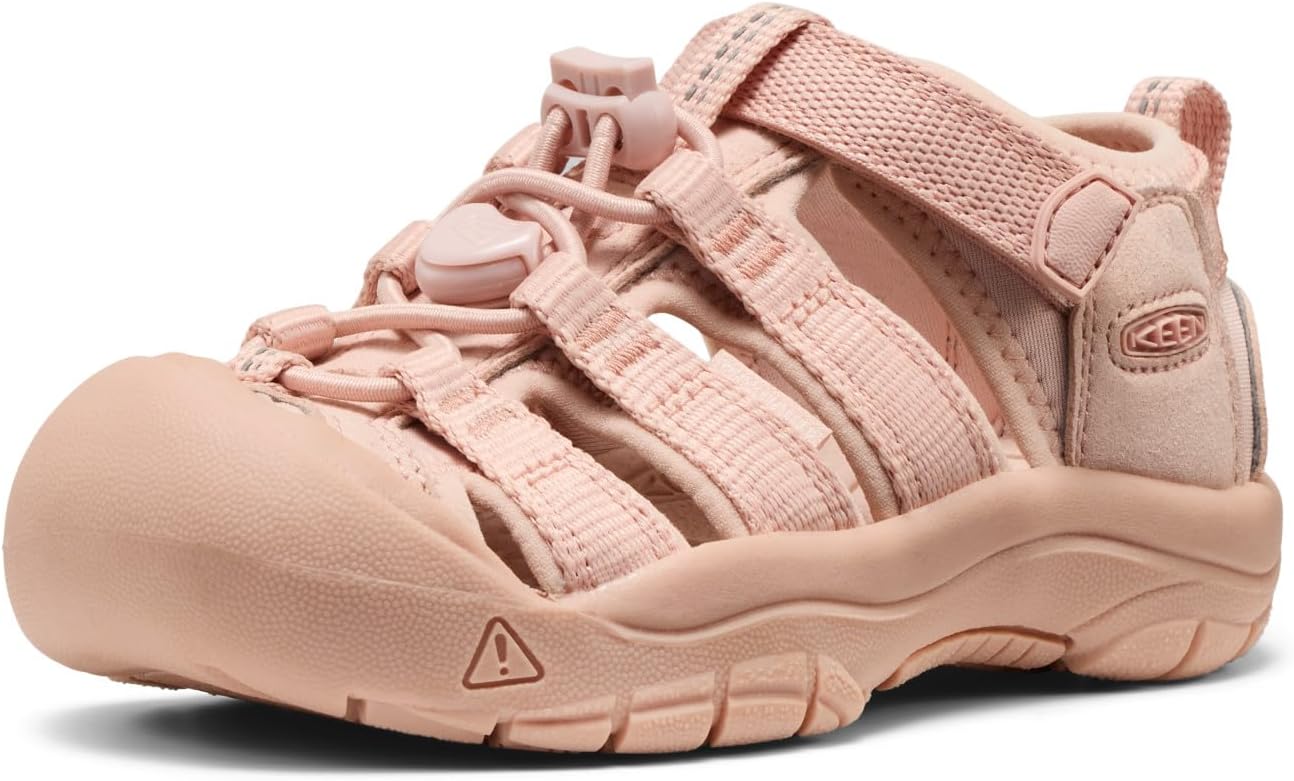

Caregiver questions
Are closed-toe water shoes always safer for toddlers?
No construction makes every setting safe. A closed front adds toe coverage, but fit, surface conditions, facility rules, supervision and the rest of the shoe still matter.
Do open-toe water shoes drain faster?
Not automatically. Drainage depends on all openings, materials, channels and ports in the exact pair, not only whether the toes are exposed.
Can a toddler wear open-toe water shoes at daycare?
Ask the specific program. Some facilities require covered toes or particular closures, and those rules should be checked before buying.
Should water shoes be sized larger for growth?
Use current measurements and the maker's chart instead of adding a guessed size jump. Excess length can let the foot slide or move toward an open edge.