 Stride Rite
Travel and Routines
Toddler Shoes for Flight Days: Plan for Airports, Seats and Arrivals
Choose toddler shoes for flight days by planning airport walking, security procedures, onboard spills, temperature changes and the arrival route.
Start here
The best flight-day pair is the one that can be managed repeatedly: secure for terminal walking, simple for the responsible adult, and appropriate for the ground waiting after landing.
Choose for the arrival before solving the airport
A flight lasts a few hours; the arrival shoe may need to work for the rest of the day. Begin with the first surface and weather the child will meet after baggage claim. A warm departure terminal can lead to a cold curb, wet pavement, a gravel rental-car lot, or a long indoor connection. Choose a pair that fits the hardest ordinary walking job on that route, then test whether its closure and coverage remain manageable through the travel process.
This order prevents a common packing mistake: selecting an extremely easy shoe for the terminal and discovering that it is poorly matched to the destination. It also prevents winter boots from becoming the automatic answer when the child will spend most of the day indoors. If the arrival genuinely requires a different category, pack that pair where it can be reached before going outside. Do not place essential arrival footwear in inaccessible checked baggage without a workable backup.
Separate secure walking from quick removal
Families often ask for shoes that come off instantly, but the pair still needs to remain on during normal terminal walking, stroller transfers, restroom stops, and hurried gate changes. Evaluate opening and hold as two different functions. The shoe should open far enough that an adult can guide the foot in without curling the toes, then fasten with enough usable adjustment to hold the heel during a clean indoor trial. A loose slip-on is not automatically travel-friendly because it requires fewer hand movements.
Review the current security procedures for the airports and travelers on the itinerary; do not assume a toddler's shoes will always stay on or always need removal. The practical goal is readiness, not predicting a universal rule. The adult handling the child should know the closure and have a place to set the shoes temporarily without losing one. Practice the sequence at home if the pair is new.
Use a three-zone flight-day test
Test the candidate against three zones. Zone one is movement: curb, terminal, connection, and arrival. Zone two is confinement: stroller, gate seating, and the aircraft seat, where bulky footwear may become warm or awkward. Zone three is the mess transition: restroom floors, drink spills, crumbs, and wet weather at either end. The same pair can pass all three, but only when its fit, cleanup needs, and destination role align.
Imagine a toddler walking ten minutes to a distant gate, resting in a stroller, then landing in steady rain. A secure everyday sneaker may handle the indoor travel but not the wet curb; a packable weather pair placed at the top of the bag could handle the final zone. On a direct trip to a dry indoor pickup, the current everyday shoe may cover the entire route. Specific zones produce a smaller, clearer packing decision than generic travel features.
Plan socks and temperature as adjustable layers
Cabin and terminal temperatures vary, so use removable clothing and appropriate socks rather than expecting the shoe to regulate every setting. Select the sock thickness before fitting the travel pair. A thicker destination sock changes the space inside the shoe and should be part of the indoor trial; it should not be added after sizing as an improvised fix. Pack a dry spare pair of socks where it can be reached after a spill or wet curb.
If shoes are removed while the child is seated, keep track of both and put them back on before the child returns to a public walking surface. Socks alone are not a general substitute for airport footwear. Inspect socks after long seated periods and allow ordinary movement when it is safe and permitted, but avoid claims that a particular shoe prevents swelling or other medical issues. Persistent discomfort or health concerns during travel belong with an appropriate clinician.
Design a spill response that does not depend on a dryer
Read the care label before the trip and decide what can be done with the materials on a flight day. A wipeable surface may be convenient, but that word does not prove that the lining can be soaked, that every stain will lift, or that disinfecting products are safe for the finish. Carry only an approved simple care item, such as a clean cloth, and follow airline liquid rules. Blot or remove loose material according to the maker's directions instead of scrubbing aggressively in a seat.
If the pair becomes saturated, switch to the accessible backup only if one is needed for the remaining route. Place the wet footwear in a temporary leak-resistant bag, then open, clean, and ventilate it at the destination as directed. A sealed travel bag prevents spread during transit but can trap moisture if treated as overnight storage. The response should protect the shoe without turning a minor spill into a complicated cleaning experiment.
Keep one reachable backup, not a carry-on shoe collection
A backup earns its place when the consequences of a wet, soiled, or unsuitable primary pair are high and the arrival route includes walking. The backup can be the destination-specific pair already needed for the trip; it does not have to be a third general sneaker. Place it near the top of the carry-on with the spare socks, not under items that cannot be unpacked at the gate. Mark both pairs so a separated shoe can be identified.
Skip the backup when the itinerary is short, pickup is immediate, and another appropriate pair is readily available at the destination. Add one when there is a long connection, uncertain weather, or no practical way to clean and dry the worn pair before the next required use. This is contingency planning, not a rule that every toddler needs two pairs onboard. Fit-check the backup too; an unworn spare of uncertain size is not a solution.
Rehearse the whole handoff, then inspect after landing
A useful rehearsal starts with the child wearing the intended socks and travel shoe. The responsible adult removes and replaces the pair on a chair, stores it briefly, folds the stroller or manages the carry-on, and confirms that the closure still works without excessive tension. Let the child walk, turn, and crouch on a clean indoor floor afterward. This reveals whether the supposedly convenient pair becomes difficult when one hand is occupied.
After arrival, check for damp socks, trapped debris, obvious rubbing, or a closure that loosened repeatedly. Those observations help plan the return flight. They are not proof of a medical condition, and one tiring travel day should not be overinterpreted. If the primary pair stayed secure and the backup remained unused, keep the same system. If the plan failed, change the packing placement, sock choice, or shoe category instead of simply adding more pairs next time.
Reviewed model starting points
Compare current exact Amazon offers
These model families connect to a verified direct Amazon listing. Check the selected size, width and color because availability and features can vary.
As an Amazon Associate I earn from qualifying purchases.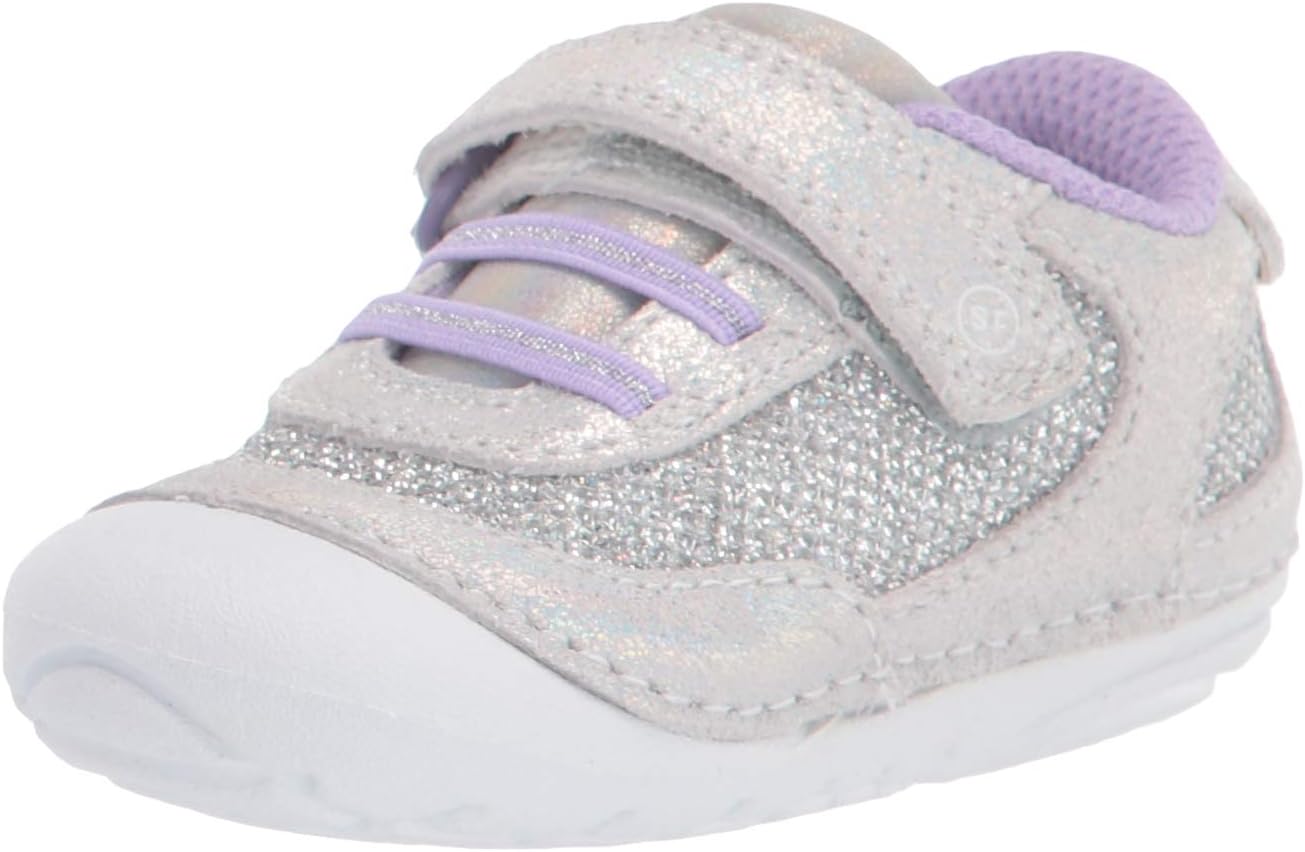

Caregiver questions
Are slip-on shoes always best for a toddler on a plane?
No. Quick entry helps only if the exact slip-on also holds the foot during terminal walking and suits the arrival. Compare opening, heel behavior, sole, destination weather, and the adult's ability to manage the pair rather than choosing by closure label alone.
Should a toddler wear shoes while seated on the aircraft?
Follow the airline's directions and manage footwear according to comfort, cleanliness, and safety. If the shoes come off at the seat, store both securely and replace them before the child returns to public walking surfaces.
Where should the destination shoes be packed?
If they are needed before reaching the accommodation, keep them accessible in the carry-on with the correct socks. A pair required for a rainy curb, snowy pickup, or extended connection should not be buried in checked luggage.
How do I handle a drink spilled inside a toddler shoe mid-flight?
Remove the shoe when safe, blot or clean only as its care directions allow, and change wet socks. Use an accessible backup for required walking if the primary pair cannot be worn, then clean and ventilate the wet pair properly at the destination.